Leave Your Message
0%

You know, global reefer trade is definitely growing, but the reliability of the equipment? It's all over the place depending on the route, the port, even the climate. Like, UNCTAD's 2023 report showed that refrigerated containers made up about 6% of the entire container fleet. And Drewry's forecast says the demand for temperature-controlled food shipping isn't slowing down anytime soon. So, looking at these numbers, one big question pops up: who on earth can actually supply dependable reefer unit parts to buyers around the globe?

Honestly, a good supplier needs to bring more to the table than just a thick catalog. I mean, sure, you need compressors, controllers, sensors, evaporator motors, belts, filters—and don't forget the actual service documentation, not just some random PDF. But here's the thing: those parts have to survive real-world conditions. Salt air, constant vibration, wild temperature swings, and those dreaded long shipping delays. You can't just slap any component in and hope for the best. I'm reminded of Thomas Eskesen—he's the founder of Eskesen Advisory and a bona fide cold-chain expert. He's always hammering on about how “cold-chain performance depends on disciplined execution across every link.” And honestly? That hits home when you're picking parts. You can't just wing it; that principle totally applies to how you source your components. Honestly, it's kind of wild how a single weak sensor can throw an entire cargo operation into chaos. You'd think such a small part wouldn't matter, but one little glitch and boom—the whole movement goes sideways.

Quality often shows up in the little things, you know? Like a relay that's properly labeled can save you tons of time when you're diagnosing an issue. Or a sealed bearing that keeps a fan motor running smoothly even in humid conditions. And having traceable serial numbers? That makes warranty claims a whole lot easier. But here's the thing – no supplier has a perfect track record when it comes to forecasting. Let's be honest about that. Demand shifts fast, and compatibility hiccups are bound to happen. So if you're buying globally, you really need to look beyond the price tag. Compare things like technical support, testing records, where they keep their stock, lead times, and how responsive they are after the sale. You know, when you look at the data from the International Maritime Organization and the Global Cold Chain Alliance, it really drives home why staying on top of maintenance matters so much. And here's the thing – the best supplier for reefer unit parts isn't just the one with the lowest price tag. Honestly, it's the partner who helps you avoid those nasty surprises even before your container rolls out of the terminal. That's where true reliability kicks in – right from the start.
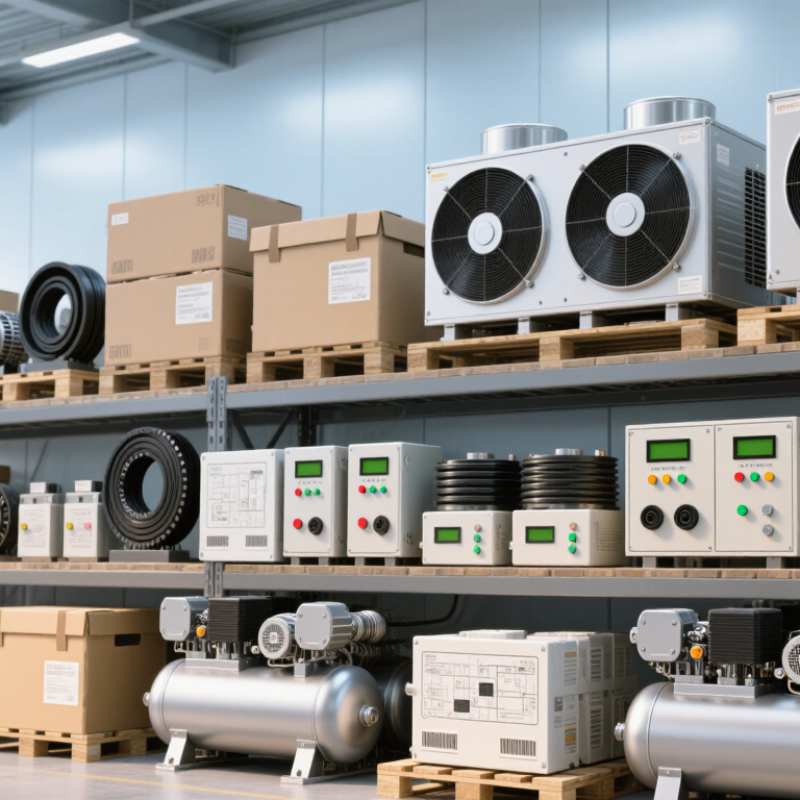
China Best Reefer Unit Parts Supplier for Global Buyers?

What Is a Reefer Unit Parts Supplier?

A reefer unit parts supplier provides replacement components for refrigerated containers, trailers, and transport systems. It is more than a trading company with a large catalog. A dependable supplier identifies the unit model, checks technical compatibility, and manages traceable inventory. Typical reefer parts include temperature sensors, controllers, fan motors, valves, filters, belts, wiring harnesses, and compressor components. Each part should arrive with specifications, inspection records, and clear storage guidance.

The need is practical. FAO’s 2019 report estimated that 14% of food is lost between harvest and retail. Weak temperature control contributes to that risk. The UNEP Food Waste Index 2024 reported 1.05 billion tonnes of food waste in 2022. Reliable maintenance can reduce avoidable failures, although parts alone cannot solve poor loading or incorrect settings. A professional supplier should offer cross-reference support, batch traceability, pre-shipment testing, and emergency logistics. In practice, a perfect-looking part may still fail because its connector, firmware, or pressure rating differs. That detail is easy to miss.

Tips: Ask for the exact unit model and serial number. Request compatibility documents before ordering. Check sensor accuracy and motor voltage. Keep critical reefer parts in sealed, labeled storage. Review failure records, not only prices. A supplier should explain uncertainty honestly. That earns more trust than promising universal compatibility.

Why China Is a Major Source of Reefer Unit Parts

China Best Reefer Unit Parts Supplier for Global Buyers?

Why China Is a Major Source of Reefer Unit Parts

China has become a major source of reefer unit parts because its industrial supply chain is broad and highly connected. Many factories produce compressors, sensors, control boards, fan motors, coils, filters, seals, and wiring assemblies. These suppliers often operate near metalworking, electronics, machining, and packaging facilities. Shorter local transport can support flexible production and competitive lead times.

Fit comes first. Experienced suppliers study drawings, equipment specifications, operating temperatures, and installation conditions before quoting. They may provide sample parts, dimensional reports, material records, and pressure or electrical test results. This process helps global buyers reduce installation problems. It also reveals whether a part is genuinely compatible or merely similar in appearance.

Cost is important, but it should not control every decision. A lower price can hide weak materials, inconsistent tolerances, or poor packaging. Not always. Buyers should review production capacity, inspection procedures, traceability, export experience, and after-sales communication. Clear technical documents matter. So does stable batch quality.

Quality can still vary between suppliers, even within the same industrial region. One inspection may not represent every shipment. Regular sampling and independent verification remain sensible. Buyers should also confirm temperature ratings, corrosion resistance, electrical safety, and storage requirements. China offers strong sourcing opportunities, but reliable results depend on careful evaluation, precise specifications, and honest communication.

Which Reefer Unit Parts Are Available from Chinese Suppliers?

Chinese suppliers provide a wide range of reefer unit parts for global buyers. Common products include compressors, condenser coils, evaporator coils, fan motors, sensors, controllers, relays, contactors, and wiring harnesses. They also supply expansion valves, solenoid valves, filter-driers, heater elements, belts, bearings, gaskets, and drain components. Availability depends on the unit model, production year, voltage, and cooling capacity.

Compressor assemblies may be available with mounting hardware and compatible electrical connections. Control boards often require matching sensor types and software settings. Pressure switches, temperature probes, and fan motors should be checked against working ranges.

A small mismatch can stop a unit from cooling correctly.

Ask suppliers for part numbers, technical drawings, dimensions, voltage data, and refrigerant compatibility. Clear details matter.

Quality evidence should include inspection records, material information, functional testing, and batch traceability. Experienced buyers may request sample parts before placing a larger order. Packaging also deserves attention, especially for coils, circuit boards, and fragile sensors.

Use moisture protection and shock-resistant cartons. A clean product photo is not proof.

Some catalogs use broad terms, and that creates avoidable confusion. I have seen parts described as “universal” when connector positions differed.

That lesson is easy to miss. Verify every interface before approval.

How to Evaluate Quality and Compatibility

When sourcing reefer spare parts from China, quality starts with clear technical evidence. Ask for material grades, dimensional drawings, inspection reports, and production dates. Photos help, but they cannot replace measurements. Fit matters.

Compatibility depends on more than model numbers. Check voltage, refrigerant circuit requirements, connector shape, mounting holes, and operating temperature. A reliable supplier should compare the replacement against your unit’s service manual. Request samples when tolerances are critical. Measure twice. Install once.

I once trusted a part that looked identical to the original, yet its seal hardened after several cold cycles. That mistake taught me to review temperature ratings and elastomer specifications carefully. The best supplier explains test methods, traceability, and warranty limits without vague promises. Independent inspection can verify dimensions, electrical performance, and packaging before shipment. Still, inspection is not perfect; field conditions may expose weaknesses that laboratory tests miss. Keep installation records and monitor vibration, frost patterns, and power consumption after fitting. Consistent communication also matters, especially when a supplier admits an occasional production error and corrects it openly.

How to Evaluate Reefer Unit Parts: Quality and Compatibility Checklist

This reference checklist summarizes the key verification areas for global reefer-part sourcing. The indicators are based on recognized container, thermal-performance, electrical-safety, ingress-protection, and quality-management requirements, including ISO 668, ISO 1496-2, IEC 60529, IEC 60204-1, and ISO 9001. Higher values indicate more verification points are typically required before approval.

What Certifications and Standards Should Buyers Check?

For global buyers, reefer unit parts require more than a low price and a polished certificate. Ask for an ISO 9001 certificate covering the actual factory and relevant processes. Check its scope, issuing body, expiry date, and audit status. For electrical assemblies, request evidence of applicable IEC safety and electromagnetic compatibility testing. RoHS and REACH declarations also matter in regulated markets. The correct requirement depends on the component, refrigerant, voltage, and destination.

For transport refrigeration equipment, ATP documentation may matter when the complete vehicle or body claims temperature performance. However, ATP is not automatically a certificate for every replacement part. Ask for material certificates, batch records, pressure-test results, wiring diagrams, and calibration records. A reliable supplier should connect each part to a lot number and inspection result. Keep records. This traceability helps investigate a failed fan motor or leaking valve months later.

The FAO’s The State of Food and Agriculture 2019 estimated that 14% of food is lost between harvest and retail. That figure makes temperature-control reliability more than a paperwork issue. Compare test conditions with real routes, including salt air, vibration, dust, and repeated door openings. CE marking, where applicable, should include a valid Declaration of Conformity, not only a printed logo. One weakness in many audits is trusting a certificate without checking the tested sample. Ask whether production parts match it. Small detail, serious consequence.

How to Compare Prices, Lead Times, and Minimum Orders

When sourcing intermodal reefer parts from China, price is only one comparison point. A cheaper valve, sensor, or controller may exclude testing, export packaging, or replacement support. Ask for a detailed quotation with part numbers, materials, tolerances, and inspection records. Request photos of actual stock, not only catalogue images. Small details matter.

Lead time should be separated into production, inspection, and shipping preparation. For regular parts, suppliers may hold finished inventory. Custom brackets or modified electrical components usually need longer scheduling. In my own early purchasing work, I compared factory dates but ignored inspection time. That mistake delayed installation by several days. Confirm the dispatch date in writing, and ask how delays are reported.

Minimum order quantities can change the real cost quickly. A supplier offering a low unit price may require fifty pieces. Another may accept ten pieces at a slightly higher price. Calculate storage, cash flow, and possible unused stock. Ask whether mixed part numbers can share one order. For critical components, order a sample first and check dimensions, connector fit, labels, and operating performance. Keep records.

Reliability needs evidence. Look for batch traceability, clear warranty terms, stable communication, and packing that protects sensitive parts from moisture and impact. A professional supplier should answer technical questions directly, even when the answer is inconvenient. Vague promises are expensive.

China Best Reefer Unit Parts Supplier for Global Buyers? - How to Compare Prices, Lead Times, and Minimum Orders

The following table provides indicative procurement benchmarks for commonly purchased refrigerated-container unit parts. Prices and lead times vary according to specification, material, certification, order quantity, customization, packaging, and shipping terms.

Part Category Typical Application Common Specification / Material Indicative Export Price
(USD per Unit)
Typical MOQ Production Lead Time Sample / Trial Lead Time Recommended Quality Checks Best Comparison Point
Electronic Controller Temperature control, alarm management, and unit diagnostics Programmable PCB assembly; 12 V, 24 V, or unit-specific voltage; conformal coating preferred $150–$500 5–20 units 15–35 working days 7–15 working days Firmware version, connector layout, alarm functions, voltage stability, burn-in test Compatibility and software functionality are usually more important than the lowest unit price
Temperature Sensor Supply-air, return-air, ambient, evaporator, or cargo-temperature measurement NTC or RTD sensor; stainless-steel probe; PVC or PTFE cable jacket $8–$45 50–200 units 10–25 working days 5–10 working days Resistance curve, temperature accuracy, cable length, waterproofing, connector pinout Accuracy tolerance and interchangeability with the existing control system
Evaporator Fan Motor Internal air circulation across the evaporator coil AC or DC motor; sealed bearings; corrosion-resistant shaft and housing $90–$280 10–30 units 20–40 working days 10–15 working days Voltage, RPM, airflow, vibration, noise, insulation resistance, bearing quality Verified airflow and motor life under continuous-duty conditions
Compressor Assembly Refrigerant compression and primary cooling operation Reciprocating or scroll design; refrigerant and oil must match the unit specification $650–$1,800 1–5 units 25–60 working days 15–25 working days Displacement, operating envelope, oil type, pressure test, electrical insulation, vibration Correct refrigerant compatibility and documented performance testing
Condenser Coil Heat rejection from the refrigeration circuit Copper tube with aluminum fins; brazed joints; anti-corrosion coating when required $180–$650 5–20 units 20–45 working days 10–20 working days Dimensions, tube diameter, fin density, leak test, pressure rating, surface treatment Dimensional accuracy and resistance to salt spray or humid environments
Filter Drier Moisture, acid, and contaminant removal from the refrigeration circuit Copper or steel shell; molecular-sieve desiccant; flare or brazed connection $6–$35 100–500 units 10–25 working days 5–10 working days Refrigerant compatibility, connection size, flow direction, pressure rating, sealed packaging Correct connection size and moisture-control performance
Door Gasket Air sealing around reefer container doors and access panels EPDM or other cold-resistant elastomer; magnetic or mechanically retained profile $35–$160 20–100 sets 15–30 working days 7–12 working days Profile dimensions, hardness, low-temperature flexibility, compression recovery, odor Profile fit and long-term sealing performance at low temperatures
Relay or Contactor Switching of compressors, fans, heaters, and auxiliary circuits Electromechanical relay or contactor; coil voltage must match the control circuit $12–$90 50–200 units 10–25 working days 5–10 working days Rated current, coil voltage, contact material, switching-cycle test, terminal temperature Electrical load rating and verified switching endurance
Pressure Switch High-pressure or low-pressure protection within the refrigeration circuit Mechanical diaphragm or electronic pressure switch; threaded or flare connection $18–$85 20–100 units 10–30 working days 7–12 working days Cut-in and cut-out pressure, reset behavior, connection dimensions, leak test Accurate pressure settings and reliable protection response
Wiring Harness Power, sensor, motor, and controller interconnection Automotive or industrial-grade cable; sealed connectors; abrasion-resistant sleeve $25–$180 20–100 sets 15–35 working days 7–15 working days Wire gauge, pinout, continuity, insulation resistance, connector locking, labeling Pin-to-pin compatibility and traceable electrical testing

Buyer Evaluation Checklist

Compare suppliers using the total landed cost rather than the quoted unit price alone. Review tooling charges, sample fees, export packaging, payment terms, shipping terms, inspection costs, warranty coverage, replacement policy, documentation, and the supplier’s ability to maintain consistent specifications across repeat orders.

Note: Price ranges are indicative market benchmarks for standard aftermarket or replacement parts and are not binding quotations. Custom-engineered parts, urgent production, low-volume orders, special materials, certification requirements, and international freight may significantly change the final price and delivery schedule.

How to Select a Reliable Supplier for Global Shipping Needs

Choosing a reliable China-based supplier for global shipping needs requires more than comparing prices. Start by checking experience with reefer container refrigeration parts, including controllers, sensors, compressors, valves, and electrical assemblies. Ask for material specifications, compatibility data, inspection records, and clear product photos. A supplier that explains technical limits openly is usually safer than one promising every solution.

Request traceable samples before placing a large order. Test connectors, seals, and temperature sensors under realistic operating conditions. During one trial shipment, a slightly loose connector caused intermittent readings after vibration exposure. The fault was small, but it delayed installation. This is why packaging design, vibration protection, and moisture control deserve written confirmation. Request carton dimensions, pallet details, and export documents before production begins.

Reliable communication matters across time zones. Confirm response times, language ability, spare-part availability, and after-sales procedures. The supplier should provide batch numbers, inspection checkpoints, and a practical warranty process. Independent factory audits can verify equipment, staffing, and quality controls. However, audits are only snapshots. Review recent shipment records and speak with comparable buyers when possible. A capable supplier may still make mistakes, but it should identify causes, share corrective actions, and prevent repetition. Delivery promises also need realistic buffer time, especially during peak seasons or port disruptions.

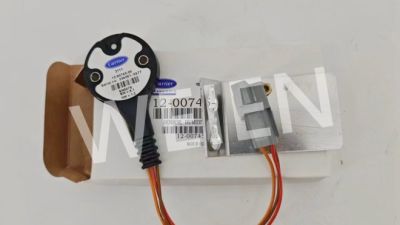
Reefer Container Humidity Monitoring: Insights from Drewry and UNCTAD Reports | 12-00745-00SV / 76-66694-00

Humidity control is an important part of modern reefer container management. Insights discussed in Drewry and UNCTAD reports highlight the growing complexity of global cold-chain logistics, where cargo may pass through multiple climates, ports, and handling stages. Temperature stability alone is not always sufficient; excessive moisture can contribute to condensation, packaging deterioration, mold growth, and quality loss in humidity-sensitive goods.

The 12-00745-00SV humidity sensor, cross-referenced with 76-66694-00, is designed as a direct replacement component for compatible refrigerated container systems. Operating at 5VDC, it measures internal humidity levels accurately and supports continuous environmental monitoring during transport. Its compatibility with EliteLINE, PrimeLINE, and ThinLINE reefer units helps restore dependable sensing performance without changing the container’s overall monitoring arrangement.

For operators, accurate humidity data can support better ventilation decisions, cargo inspection, and maintenance planning across long-distance shipments. By identifying moisture changes early, the sensor helps personnel respond to unstable conditions before they affect sensitive products. It is suitable for refrigerated logistics applications involving fresh produce, pharmaceuticals, and other goods requiring controlled cold-chain environments.

FAQS

Which reefer unit parts can Chinese suppliers provide?

Common parts include compressors, coils, fan motors, sensors, controllers, relays, contactors, and wiring harnesses. Valves, filter-driers, heaters, belts, bearings, gaskets, and drain components may also be available. Availability depends on model, production year, voltage, and cooling capacity.

What information should buyers send before requesting a quotation?

Provide the part number, unit model, production year, voltage, cooling capacity, and refrigerant details. Add drawings, dimensions, connector photos, and operating ranges when possible. Details prevent expensive mismatches.

Why can a small part mismatch stop cooling?

A sensor may use the wrong range, or a connector may have different pin positions. A controller may also require matching software settings and sensor types. “Universal” can be misleading. Check every interface carefully.

How can buyers evaluate part quality?

Request inspection records, material information, functional testing, and batch traceability. Ask for sample parts before placing a large order. Photos help, but photos alone prove very little.

What packaging is suitable for sensitive reefer parts?

Coils need protection from bending and impact during transport. Circuit boards and sensors need moisture barriers and shock-resistant cartons. Ask suppliers to show actual packing methods before shipment.

How should buyers compare prices between suppliers?

Compare the full quotation, not only the unit price. Check testing, export packaging, warranty support, and replacement terms. A cheaper controller may exclude important services. That detail is easy to miss.

How should lead time be calculated?

Separate production time, inspection time, and shipping preparation. Regular parts may be available from stock. Custom brackets and modified electrical parts usually require longer scheduling. Confirm the dispatch date in writing.

How do minimum order quantities affect total cost?

A low unit price may require fifty pieces, while another supplier accepts ten. Calculate storage, cash flow, and unused inventory. Ask whether different part numbers can share one order. Small quantities may cost more, but they reduce risk.

What should buyers check before approving a sample?

Check dimensions, connector fit, labels, mounting holes, voltage, and operating performance. Record the results with photographs and test notes. I once trusted factory dates and ignored inspection time. That delay was avoidable.

What signs suggest a supplier may be reliable?

Look for clear technical answers, traceable batches, stable communication, and written warranty terms. A supplier should explain problems directly, even when the answer is inconvenient. Vague promises become costly later.

Conclusion

Choosing the right Reefer Unit Parts supplier is essential for maintaining reliable temperature-controlled transportation and reducing equipment downtime. China has become a major sourcing destination because its manufacturing sector offers broad product availability, competitive pricing, flexible production capacity, and export experience. Global buyers can typically source components such as compressors, condensers, evaporators, fans, controllers, sensors, filters, valves, electrical parts, and maintenance kits from specialized suppliers.

Before placing an order, buyers should evaluate material quality, dimensional accuracy, performance, compatibility, testing procedures, and technical support. Certifications, quality management systems, safety requirements, and applicable international standards should also be carefully verified. Price should be compared together with lead time, minimum order quantities, packaging, shipping arrangements, warranty terms, and after-sales service. A reliable supplier should communicate clearly, provide complete product information, support sample testing, maintain consistent quality, and demonstrate experience with global shipping requirements. Careful comparison and verification can help buyers build a stable supply chain and select Reefer Unit Parts that offer dependable performance and long-term value.
Samantha

Samantha

Samantha is a highly skilled marketing professional at Xinchang Weien Import & Export Co., Ltd., a trusted name in the integrated industry and trading sector. With a profound understanding of refrigeration equipment and spare parts, she is dedicated to showcasing the company’s extensive product......
Previous 2026 Best Refrigeration Spare Parts for Global Buyers?