A Freezer Compressor Unit is pretty much the heartbeat of any commercial or even home freezer setup. It's the component that keeps everything running smoothly by circulating refrigerant through the sealed cooling loop. Without it, you simply can't get those cold temps or maintain them.
Inside the unit, the compressor sucks in low-pressure refrigerant vapor from the evaporator. Then, it works like crazy to compress that vapor into a hot, high-pressure gas. This hot gas heads over to the condenser, where it loses heat through metal coils and airflow — basically making the refrigerant turn into a liquid. From there, it passes through an expansion device, where the pressure drops sharply. Then, the refrigerant enters the evaporator and absorbs heat from inside the freezer, cooling everything down. This whole cycle keeps going as long as the system calls for cooling.
But, little things can tell you a lot. For example, a quick little click before the motor kicks on might be totally normal. A warm discharge pipe—also pretty common—doesn’t necessarily mean trouble. However, if you notice lots of vibrations, that could be a red flag. Frost patterns, electrical readings, and how stable the temperature stays — all of these are clues that help diagnose issues. Remember, this isn’t just a big motor. It’s a carefully coordinated system of pressure, heat, electricity, and airflow working together.
In this guide, I’ll walk you through the main types of compressors, how they work through different stages, key parts to look out for, and signs that something might be going wrong. We’ll also cover capacity, refrigerant compatibility, lubrication, and some tips on maintenance. Keep in mind, real-world setups are rarely perfect—things like ambient heat, dirty coils, or overloading can all throw off performance. That’s why it’s so important to compare specs with actual operating conditions. Having a good grasp of this stuff helps owners, installers, and repair guys make smarter, safer choices and keep everything running smoothly.
Hope this gives you a clearer picture of what’s happening behind the scenes in a freezer compressor!
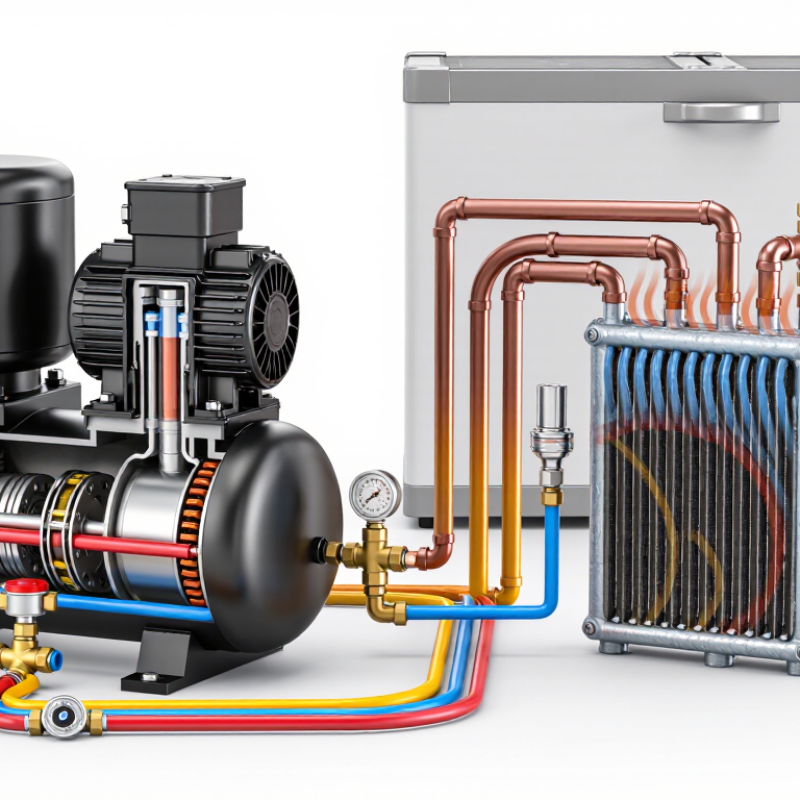
A freezer compressor unit is the mechanical power package that moves heat away from a frozen space. It normally contains a compressor, motor, oil system, controls, and connections for the refrigerant circuit. The compressor draws in low-pressure vapor from the evaporator. It then compresses that vapor into a hot, high-pressure gas.
The heat must leave somewhere. A separate Freezer Condenser Unit releases it through metal fins, usually beneath or behind the cabinet. The refrigerant then becomes a liquid and travels through an expansion device. Pressure drops sharply there. The cold refrigerant enters the evaporator, absorbs heat from stored products, and returns to the compressor. The cycle repeats.
It is a closed loop.
The International Institute of Refrigeration estimated that refrigeration uses about 17% of global electricity. That figure shows why compressor efficiency matters beyond one cabinet. A poorly cleaned condenser can raise operating pressure, increase noise, and lengthen running time. In field inspections, dust often looks harmless but behaves like insulation over the coil. Temperature stability may suffer before a visible failure appears.
ASHRAE’s Handbook—Refrigeration emphasizes correct airflow, refrigerant control, and heat rejection. Still, the label “compressor unit” is not always used consistently. Some technicians mean only the compressor, while others mean the complete condensing assembly. That ambiguity deserves attention when ordering parts or comparing performance data.
A Freezer Refrigeration Unit, often called a Freezer Compressor Unit, moves heat away from stored food. Its compressor is the working heart. It compresses low-pressure refrigerant vapor into a hot, high-pressure gas. The condenser then releases heat into the surrounding room. The refrigerant becomes a liquid. Heat leaves the cabinet.
The main components work as one sealed circuit. A filter-drier removes moisture and harmful particles. The expansion valve lowers refrigerant pressure and temperature. The cold refrigerant enters the evaporator coil, usually positioned behind the freezer’s inner wall. Fans move air across this coil, creating the familiar dry, biting cold. Sensors and controls regulate cycling, defrosting, and alarm conditions. A poorly adjusted sensor can cause unnecessary energy use. That detail is easy to miss.
Energy matters. The International Energy Agency reported that cooling demand could more than triple by 2050 without stronger efficiency measures. UNEP’s 2022 Cooling Emissions and Policy Synthesis Report also links efficient equipment with lower electricity demand and emissions. A practical inspection should check coil cleanliness, door seals, airflow, and frost thickness. Keep the condenser clear. Measure operating temperatures, not only display readings. A technician should also verify refrigerant pressures and electrical connections. Tip: Leave air gaps around stored products. Overloading blocks circulation and makes the compressor work longer. No system is perfect. Real performance depends on installation, room temperature, maintenance, and daily loading habits.
| Component | Primary Function | How It Works in the Refrigeration Cycle | Typical Operating Information | Common Service Considerations |
|---|---|---|---|---|
| Hermetic or Semi-Hermetic Compressor | Raises the pressure and temperature of the refrigerant vapor so heat can be rejected at the condenser. | The compressor draws low-pressure vapor from the evaporator and compresses it into a high-pressure vapor. | Freezer systems commonly use reciprocating, scroll, or rotary compressors. Evaporating temperatures are often approximately −35°C to −10°C, depending on the freezer application. | Check for abnormal noise, excessive vibration, overheating, oil loss, and incorrect suction or discharge pressure. |
| Electric Motor | Provides the mechanical power needed to drive the compressor mechanism. | The motor converts electrical energy into rotation or reciprocating motion inside the compressor housing. | Single-phase motors commonly use a start device and run capacitor. Larger systems may use three-phase motors and electronic protection. | Verify supply voltage, running current, winding resistance, insulation condition, and correct phase sequence where applicable. |
| Crankshaft, Pistons, or Scroll Set | Compresses the refrigerant vapor inside the compressor shell. | In reciprocating designs, pistons reduce cylinder volume. In scroll designs, two interleaving scrolls gradually reduce the vapor pocket volume. | Moving parts require suitable refrigeration oil for lubrication and heat removal. | Low oil level, liquid refrigerant return, contaminated oil, or repeated liquid slugging can damage these parts. |
| Suction Inlet and Suction Tube | Returns low-pressure refrigerant vapor from the evaporator to the compressor. | After absorbing heat in the freezer cabinet, the vapor travels through the suction line and enters the compressor. | The suction line is normally cool or cold during operation, but it should not be heavily frosted near the compressor on a properly adjusted system. | Inspect for restrictions, leaks, poor insulation, excessive pressure drop, and signs of liquid refrigerant returning to the compressor. |
| Discharge Outlet and Discharge Tube | Carries hot, high-pressure refrigerant vapor from the compressor to the condenser. | The compressed vapor leaves the compressor at a substantially higher temperature and pressure than it had at the suction inlet. | Discharge tubing is normally hot during operation. Excessive discharge temperature can indicate poor cooling, low charge, over-compression, or restricted airflow. | Check brazed joints, vibration wear, pressure readings, and tube temperature while avoiding contact with hot surfaces. |
| Condenser Coil | Rejects heat from the refrigerant to the surrounding air or cooling water. | High-pressure vapor releases heat, condenses into a high-pressure liquid, and then flows toward the metering device. | Air-cooled condensers require adequate airflow. The condensing temperature is normally above the surrounding air temperature in an air-cooled system. | Remove dust and lint, keep airflow paths clear, and inspect the fan, motor, coil fins, and mounting points. |
| Condenser Fan and Fan Motor | Moves air across an air-cooled condenser to remove heat. | The fan maintains airflow so the refrigerant can condense efficiently after leaving the compressor. | Fan operation may be continuous or controlled by pressure, temperature, or system demand. | A failed fan can cause high head pressure, compressor overheating, reduced cooling capacity, and safety shutdowns. |
| Liquid Receiver (if fitted) | Stores excess liquid refrigerant and helps maintain a stable liquid supply to the expansion device. | Condensed liquid refrigerant collects in the receiver before entering the liquid line. | Receivers are more common in systems with varying load, pump-down control, or significant refrigerant charge variation. | Check for corrosion, damaged valves, abnormal temperature differences, and correct service access procedures. |
| Filter-Drier | Removes moisture, acid, and solid contaminants from the liquid refrigerant stream. | Liquid refrigerant passes through desiccant material before reaching the expansion device. | A clean filter-drier produces only a small temperature difference across its body during normal operation. | A noticeable temperature drop across the drier may indicate restriction. Replace it after major repairs or when the sealed system has been opened. |
| Expansion Valve or Capillary Tube | Controls refrigerant flow and reduces the liquid pressure before the evaporator. | The pressure drop causes part of the liquid refrigerant to flash into vapor, lowering its temperature before it enters the evaporator. | Small freezers often use a capillary tube, while larger or variable-load systems may use a thermostatic or electronic expansion valve. | Incorrect sizing, blockage, or poor adjustment can cause low evaporator pressure, inadequate cooling, or liquid return to the compressor. |
| Evaporator Coil | Absorbs heat from the freezer compartment or product space. | Low-pressure refrigerant evaporates inside the coil as it absorbs heat, then returns to the compressor as vapor. | Evaporator temperatures are below the target cabinet temperature. Frost patterns should be relatively even on a properly charged and airflow-balanced system. | Heavy ice, blocked airflow, dirty surfaces, or a faulty defrost system can reduce heat transfer and cooling capacity. |
| Start Relay, Capacitor, or Electronic Starting Device | Helps the compressor motor start and transition to normal running operation. | The starting device supplies or switches the starting circuit, allowing the motor to overcome its initial load. | Components are selected according to motor design, voltage, frequency, and starting-current requirements. | Clicking, repeated starting attempts, humming without rotation, or tripped overload protection may indicate a starting-component fault. |
| Overload Protector | Protects the compressor motor from excessive current or temperature. | It opens the electrical circuit when motor temperature or current rises above a safe limit and resets after cooling, if designed as an automatic type. | Protection may be mounted inside the compressor shell or externally near the electrical terminals. | Frequent trips can result from high condensing pressure, low voltage, locked mechanical parts, poor ventilation, or an incorrect component. |
| Pressure Control or Safety Switch | Monitors system pressure and protects the refrigeration circuit. | A low-pressure control can stop the compressor during pump-down, while a high-pressure control can shut it down when discharge pressure becomes unsafe. | Settings depend on refrigerant type, operating temperature, compressor design, and local safety requirements. | Never bypass a safety control. Investigate the underlying cause of repeated high- or low-pressure shutdowns. |
| Refrigeration Oil | Lubricates moving parts and helps transfer heat away from internal compressor components. | Oil circulates in small quantities with the refrigerant and is designed to return to the compressor through the suction line. | The oil type must be compatible with the compressor and refrigerant. Oil contamination can reduce lubrication performance. | Use only the specified oil type and amount. Excessive oil, moisture, or refrigerant dilution can cause poor lubrication and mechanical wear. |
A freezer compressor unit is the mechanical heart of a refrigeration system. It contains a motor, compressor, electrical controls, and a sealed housing. The refrigeration cycle begins when the compressor draws cool, low-pressure refrigerant vapor from the evaporator. This vapor has absorbed heat from the freezer compartment. The compressor then squeezes it into a smaller space.
The hot, high-pressure vapor leaves through the discharge line and enters the condenser coil. Air moving across the coil removes heat, allowing the refrigerant to change into a high-pressure liquid. From there, the liquid passes through an expansion device. Its pressure drops quickly, and the refrigerant becomes much colder. It then enters the evaporator, where it absorbs heat from stored food and interior air.
A technician can often identify this sequence by touch and sound. The discharge line may feel hot, while the suction line remains cool. A brief hum is normal during startup. Excessive vibration, repeated clicking, or a compressor that runs without cooling needs careful inspection. A simplified diagram can make the process appear perfectly smooth, but real systems respond to load, room temperature, airflow, and frost. That detail is easy to overlook. Even a clean condenser cannot correct a damaged compressor or an incorrect refrigerant charge.
What Is a Freezer Compressor Unit and How Does It Work?
A freezer compressor unit is the mechanical heart of a low-temperature refrigeration system. In a Freezer Room Condensing Unit, the compressor receives cool, low-pressure refrigerant vapor from the evaporator. An electric motor turns a crank, scroll, or rotary mechanism inside a sealed housing. This movement reduces the vapor’s available space and raises its pressure. Pressure rises quickly. The refrigerant also becomes hot.
The discharge line carries this hot, high-pressure vapor toward the condenser. There, fans or surrounding air remove heat, allowing the vapor to change into a liquid. The liquid passes through an expansion device, where pressure drops sharply. It becomes colder as it enters the evaporator. Inside the freezer, the refrigerant absorbs heat from air, shelves, and stored products. The vapor returns to the compressor, and the cycle repeats.
In field service, abnormal sounds, frost patterns, and discharge temperature provide useful clues. A rattling sound can suggest mechanical wear, but diagnosis should include pressure readings and electrical tests. A compressor does not create cold directly. It moves heat by controlling refrigerant pressure. Small errors matter. Incorrect charge, restricted airflow, or liquid entering the compressor can damage components. Clean coils and stable airflow often reveal problems before failure occurs. Still, this observation cannot replace service data or qualified measurements.
How the compressor moves and pressurizes refrigerant
In a typical small R-600a freezer system, the compressor draws in low-pressure vapor from the evaporator and compresses it into a high-pressure, high-temperature vapor for the condenser. Representative suction and discharge pressures are shown above; actual values vary with ambient temperature, refrigerant charge, load, and system design.
A freezer compressor unit is the mechanical heart of a refrigeration system. It circulates refrigerant through sealed tubing. In a Blast Freezer Condensing Unit, the compressor draws in low-pressure vapor from the evaporator. It compresses that vapor into a hot, high-pressure gas.
The evaporator coil sits inside the freezer cabinet. Cold refrigerant absorbs heat from the air and stored products. A fan moves air across the coil, creating the sharp airflow felt during door opening. The heated refrigerant then travels to the condenser outside the cabinet. There, condenser coils release heat into the room. The refrigerant becomes liquid before passing through an expansion device. Pressure drops quickly, and the refrigerant becomes cold again. This cycle repeats continuously. The International Institute of Refrigeration estimates that refrigeration and air-conditioning systems use about 20% of global electricity. That figure shows why airflow, insulation, and compressor control matter. In practice, a dirty condenser can raise operating temperatures. That small maintenance issue is often underestimated.
Tips: Keep condenser coils clean and leave space around them. Check door gaskets for loose corners. Avoid loading warm products in large batches. Measure cabinet temperature with a calibrated thermometer, not touch. Frost patterns can reveal airflow problems, but they need professional interpretation. Even experienced technicians can misread them.
A freezer compressor unit is the system’s working engine. It removes low-temperature heat by circulating refrigerant through a sealed cooling circuit. The compressor draws in cool, low-pressure vapor and compresses it into hot, high-pressure vapor. That vapor then moves toward the condenser.
Different compressor designs suit different freezer demands. Hermetic reciprocating compressors are common in household freezers and small commercial cabinets. Their piston movement handles modest refrigerant loads efficiently. They are compact and quiet, but repairs usually require unit replacement because the motor and compressor share one sealed shell.
Semi-hermetic reciprocating compressors serve supermarkets, restaurants, and medium-sized cold rooms. Technicians can open the housing for valve or motor inspection. This matters when downtime becomes expensive.
Scroll compressors provide smooth, low-vibration operation in medium-capacity freezer systems. They work well where steady temperatures and reduced noise matter. Rotary compressors fit smaller cooling equipment, especially compact display freezers, though their performance can weaken under heavy low-temperature loads.
Large cold-storage facilities may use screw compressors. These units manage continuous operation and high refrigerant flow. They need careful oil management and qualified servicing. Variable-speed compressors can adjust output as the freezer load changes, saving energy during quieter periods. However, the best choice is not always obvious. Room insulation, door openings, ambient temperature, and refrigerant conditions all affect performance. A powerful compressor cannot fix poor seals. Even experienced installers should verify operating pressure, superheat, and airflow before selecting a unit.
It moves refrigerant through sealed tubing and starts the cooling cycle. The compressor is the mechanical heart.
The compressor draws cool, low-pressure vapor from the evaporator. It compresses the vapor into hot, high-pressure gas.
Air removes heat from the hot vapor. The refrigerant changes into a high-pressure liquid.
An expansion device lowers its pressure quickly. The refrigerant then becomes much colder.
Cold refrigerant absorbs heat from interior air and stored products. A fan moves air across the evaporator coil.
A brief startup hum can be normal. The discharge line may feel hot, while the suction line stays cool.
Excessive vibration, repeated clicking, or continuous running without cooling needs attention. These signs do not prove one cause.
Keep condenser coils clean and leave clear space around them. Dirty coils can raise operating temperatures.
Use a calibrated thermometer instead of touch. Touch can mislead, especially after opening the door.
Frost patterns may reveal airflow issues, but they need professional interpretation. Even experienced technicians can misread them.
A Freezer Compressor Unit is the central part of a refrigeration system, responsible for circulating refrigerant and helping maintain low temperatures. Its main components typically include the compressor, motor, condenser, expansion device, refrigerant lines, and protective controls. The process begins when low-pressure refrigerant vapor returns from the freezer cabinet to the compressor. The compressor draws in this vapor, compresses it, and raises both its pressure and temperature so it can continue through the system.
After compression, the hot refrigerant releases heat through the condenser and changes into a high-pressure liquid. It then passes through an expansion device, where its pressure drops and its temperature falls sharply. The cold refrigerant enters the evaporator, absorbs heat from inside the freezer, and returns as vapor to repeat the cycle. Different types of freezer compressor units, including reciprocating, rotary, scroll, and screw designs, are selected according to freezer size, cooling capacity, operating conditions, energy needs, and maintenance requirements.