Leave Your Message
High-performance drop-in replacements, precision control interfaces, and heavy-duty evaporators optimized for Bitzer compressor integration and harsh refrigeration environments.
In modern industrial and commercial refrigeration infrastructure, condensing units operating around semi-hermetic reciprocating and compact screw architectures represent the thermodynamic core of temperature-controlled logistics. As global supply chains face heightened pressures for cold chain integrity, energy conservation, and refrigerant transition compliance (such as EU F-Gas regulations, EPA SNAP, and Kigali Amendment phase-downs), facility operators are increasingly turning toward precision-engineered aftermarket replacement condensing units designed for Bitzer compressors.
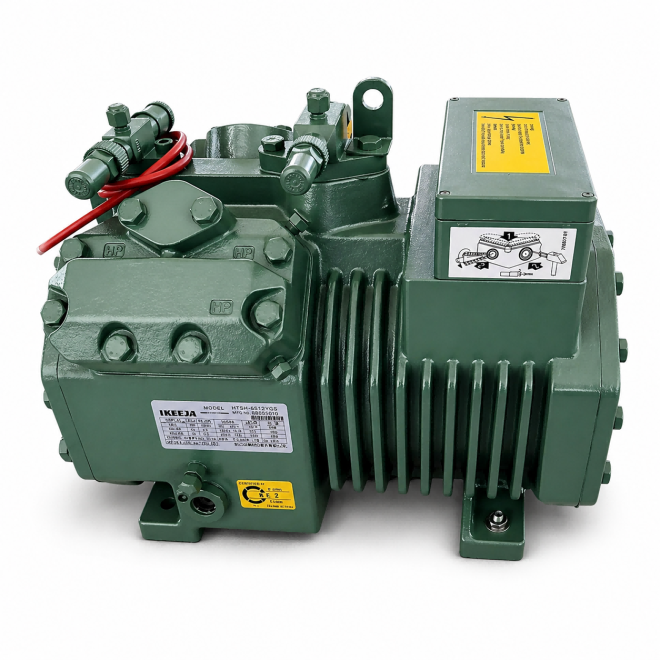
Bitzer reciprocating and screw compressors have long set benchmarks for mechanical reliability, volumetric efficiency, and operational endurance. However, complete factory assemblies often present long delivery lead times, proprietary lock-ins, and high capital expenditure. The contemporary aftermarket landscape has evolved far beyond rudimentary copies; high-tier aftermarket condensing units now provide synchronized thermodynamic matching, modular condenser geometries, advanced microchannel or internally grooved copper coil configurations, and smart electronic expansion management that directly mate with Bitzer compression blocks—delivering equal or superior performance at significantly reduced total lifecycle costs.
Precise displacement alignment from 2-cylinder mini compressors to large 6-cylinder and compact screw configurations, preserving discharge pressure dynamics and lubrication stability.
Full thermodynamic optimization for R448A, R449A, R407F, R513A, and natural refrigerants like R290 and CO2 (R744) subcritical/transcritical operation profiles.
Stepless capacity modulation with variable frequency drives and electronically commutated condenser fan assemblies to slash annual power draw by up to 28%.
A frequent vulnerability in cold storage retrofits is improper oil management under part-load conditions. When retrofitting a condensing unit onto an existing Bitzer-based network, our aftermarket units integrate high-efficiency centrifugal oil separators with integrated float valves, optimized crankcase heater controls, and specialized suction accumulators. This prevents liquid slugging during defrost cycles and guarantees continuous lubrication back to the compressor eccentric shaft, bearings, and cylinder walls even during deep low-temperature operations (-35°C to -45°C evaporating temperatures).
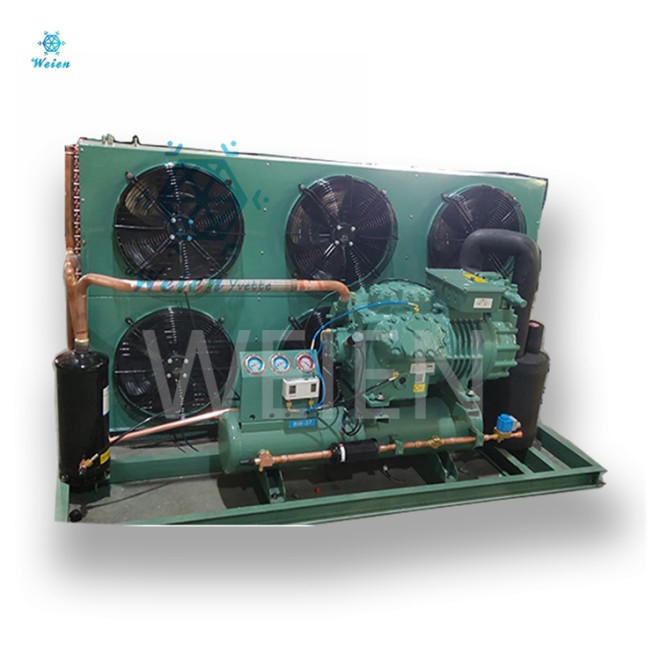
Furthermore, air-cooled condenser coil designs utilize micro-fin copper tubing with hydrophilically coated wave aluminum fins. This reduces the condensing temperature delta (TD) to 8K–10K, maintaining exceptionally low discharge superheat and extending compressor valve plate and reed lifespan exponentially.
Examining how precision aftermarket condensing units fulfill rigorous duty-cycles across critical cold chain sectors.
High-throughput automated distribution hubs demand 24/7 uninterrupted cooling spanning cross-dock chill rooms (+2°C to +4°C) down to automated storage and retrieval system (ASRS) deep-freeze chambers (-25°C). In these setups, our Bitzer-compatible condensing units leverage dual-stage subcoolers and electronic liquid injection (such as Varicool or CIC-equivalent aftermarket management). This ensures rapid pull-down times when warehouse high-speed dock doors cycle frequently during peak freight staging hours.
Blast freezing demands instantaneous heat extraction from core product temperatures down to -18°C within strict time limits to prevent ice crystal expansion and cellular degradation. Aftermarket multi-compressor parallel condensing racks operating with 4FES, 4NES, and 6HE series equivalents supply high mass flow rates and dynamic evaporator coil coordination. Stainless-steel casing and heavy-duty fin pitch evaporators prevent frost bridging, maintaining maximum heat transfer coefficients throughout prolonged freezing batches.
Long-term storage of pome fruits, berries, and root vegetables requires minimal temperature fluctuation (within ±0.3°C) and stringent relative humidity control (90%–95%) to inhibit moisture weight loss. Custom aftermarket condensing units equipped with inverter modulation and electronic back-pressure regulating systems maintain high evaporating temperatures, avoiding excessive air dehydration and preserving produce cellular firmness over 6 to 10 months of containment.
For vaccine storage (+2°C to +8°C) and active pharmaceutical ingredient (API) ultra-low stabilization (-40°C to -80°C cascades), failure is not an option. Drop-in replacement condensing systems provide dual-circuit 100% redundancy, automated hot gas defrost bypass, and digital modbus interfaces that integrate into central SCADA networks for CFR Part 11 compliant temperature logging and remote diagnostic telemetry.
Direct comparison highlighting mechanical tolerances, energy coefficients, and serviceability advantages.
| Performance / Feature Parameter | Standard OEM Replacement Unit | Advanced Aftermarket Condensing Unit | Operational Impact & ROI Advantage |
|---|---|---|---|
| Displacement & Port Geometry | Proprietary fixed footprint | 100% Direct Drop-in Mating Dimensions | Zero piping modification; reduces install labor by 40% |
| Condenser Heat Exchange Area | Standard nominal sizing | 15%–20% Oversized Subcooling Coils | Lowers condensing temperature by 3–5°C; increases COP by 8–12% |
| Refrigerant Compatibility | Model-specific rating | Multi-Refrigerant Rated (R404A / R448A / R449A / R513A) | Future-proof against refrigerant phase-outs and regulatory bans |
| Oil Management Architecture | Standard internal splash / simple baffle | Centrifugal separator + coalescing filter core | Prevents oil pooling in low-temp evaporators; safeguards bearings |
| Fan Motor Efficiency | Standard AC shaded-pole / PSC motors | IP55 EC Fan Motors with stepless speed control | Reduces acoustic noise by 12 dB(A) and cuts fan power consumption by 65% |
| Procurement Lead Time | 12 – 24 Weeks standard factory wait | Ready-to-ship stock & fast-turn customization | Mitigates emergency cold storage downtime risk and product spoilage |
Whether you are setting up a new refrigeration system or maintaining existing equipment, we provide flexible solutions for both commercial and industrial applications. Our clients include cold storage warehouses, food processing plants, supermarket chains, transport refrigeration companies, and logistics providers.
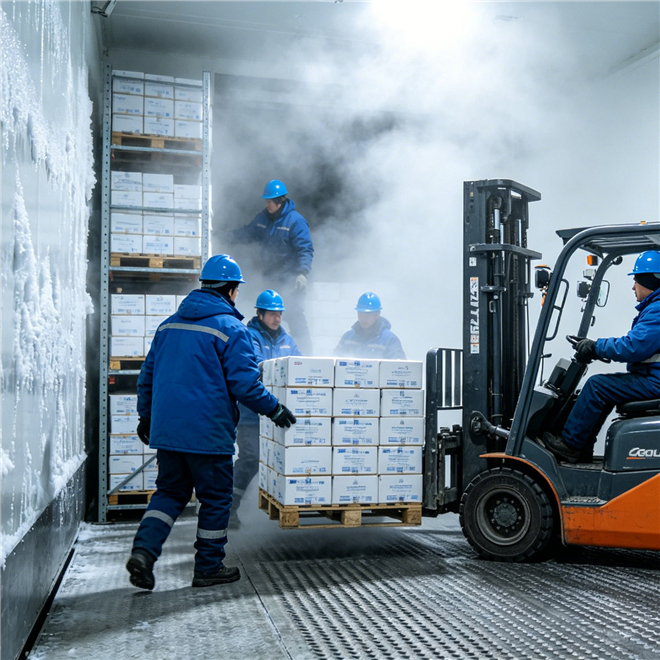

Lies in our extensive inventory and product diversity — reducing the need for multiple suppliers and simplifying your procurement process. By consolidating your sourcing with us, you save time, reduce shipping costs, and minimize administrative overhead.
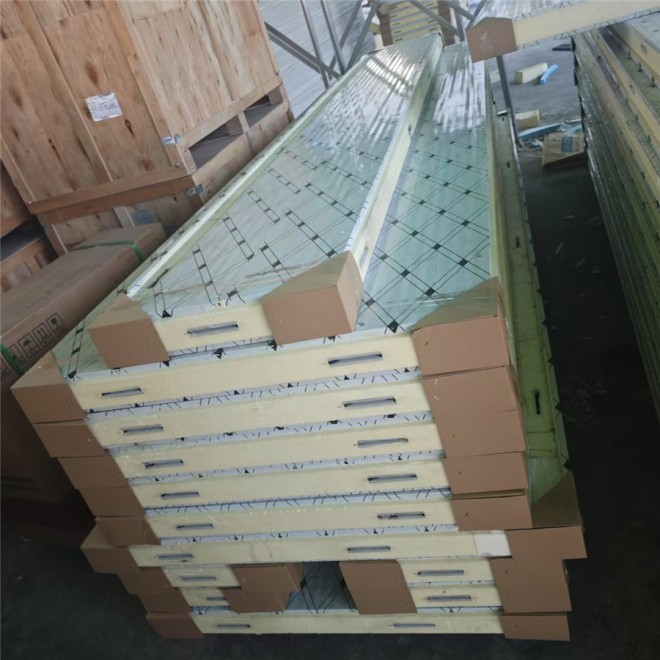
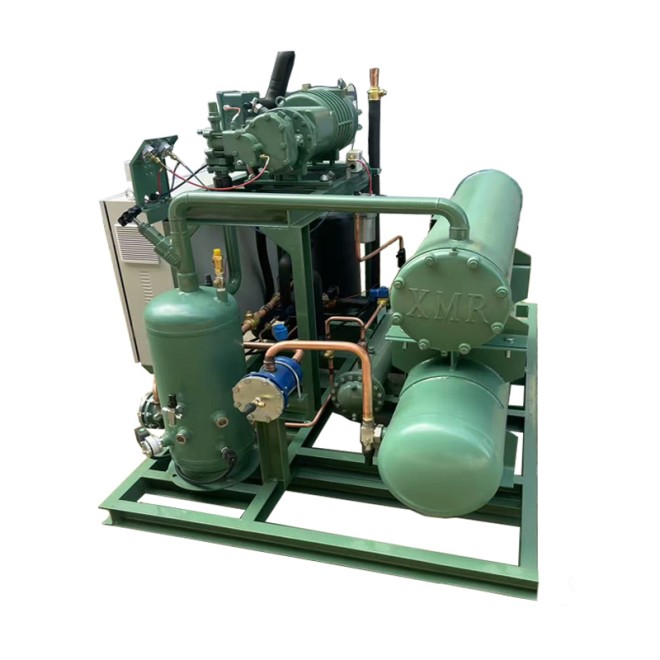
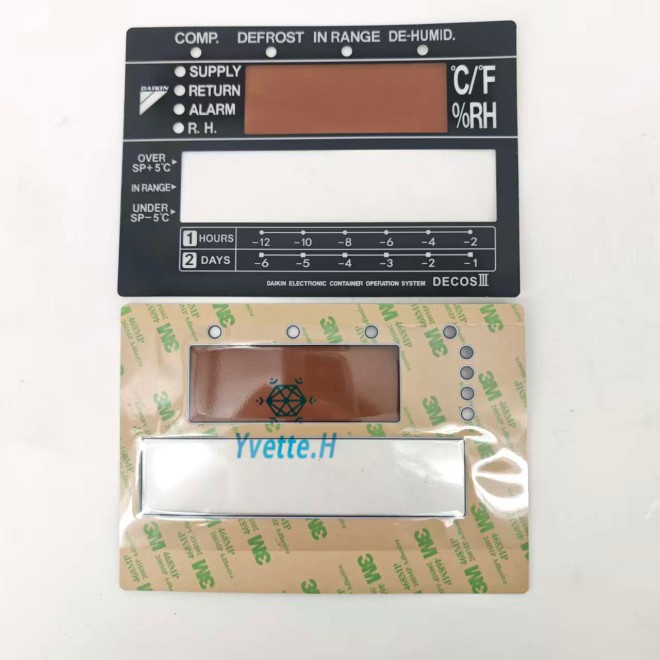
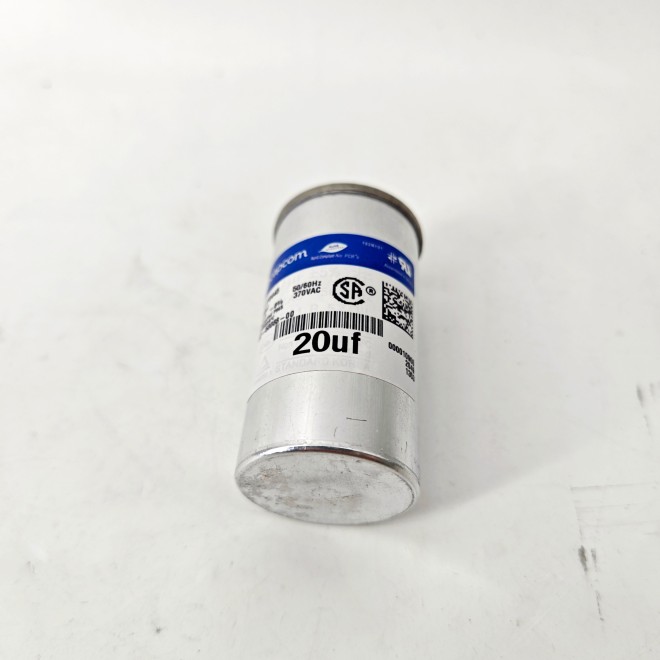
From complete piston and screw condensing racks to delicate controller overlays, motor capacitors, and custom polyurethane insulated panel enclosures, we provide a unified thermodynamic ecosystem tailored to high-load operational reliability.
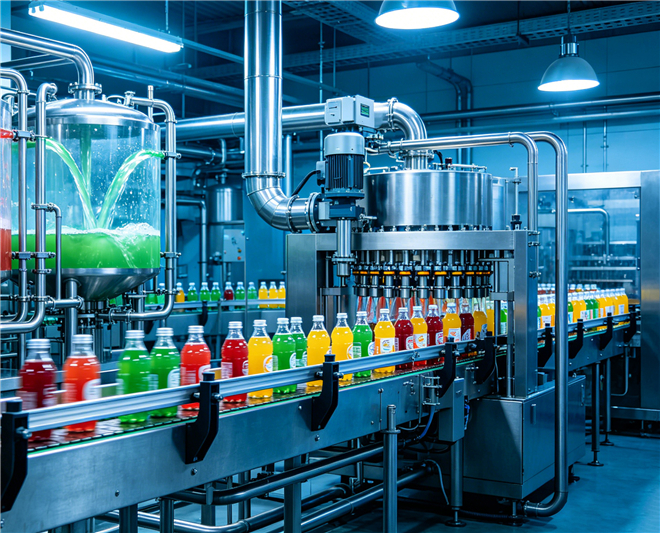
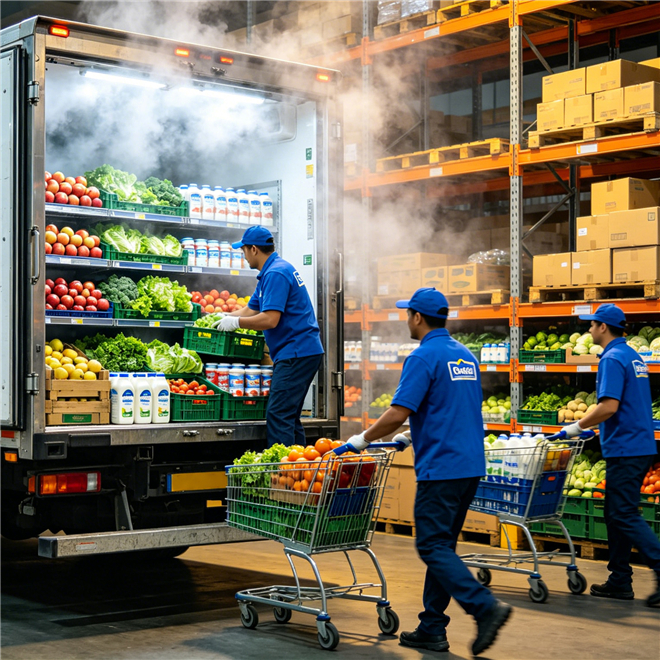
At Xinchang Weien, customer satisfaction is at the core of what we do. With solid industry expertise and a commitment to reliable service, we don't just supply products — we aim to exceed your expectations and support the long-term success of your refrigeration operations. Contact us today to experience the convenience of one-stop refrigeration sourcing.
Our dedicated engineering support team assists with thermodynamic heat load calculations, compressor displacement cross-referencing, and retrofit commissioning guidelines, ensuring every aftermarket drop-in operates within optimal manufacturer operating envelopes.
Executing an aftermarket condensing unit replacement on a legacy refrigeration circuit requires structured field procedures to ensure the new compressor delivers its intended 15+ year operational design life. Below is the standardized engineering protocol recommended by refrigeration specialists:
Prior to mounting the replacement condensing assembly, inspect the failed compressor oil for burnout acidity. If acid levels exceed 0.05 TAN (Total Acid Number), install temporary high-capacity suction line filter-driers with activated alumina cores. Flush the evaporator and liquid lines with dry nitrogen (OFDN) to eliminate stagnant, oxidized mineral oil or POE residue that could contaminate the new ester lubricant charge.
Operating with improper suction superheat is the leading cause of premature compressor valve failure. Always tune the external superheat at the compressor inlet between 10K and 20K (with operating evaporator superheat between 5K and 8K). For systems shifting from high-GWP R404A to low-GWP R448A/R449A blends, account for temperature glide (typically 4K–5K) when charting bubble and dew point pressure references.
Ensure that all motor terminal connections torque to exact OEM specifications to prevent high-resistance hot spots. Incorporate electronic phase asymmetry and under/over-voltage monitoring modules (such as SE-E1 or Kriwan INT69 equivalents) to protect the stator motor against phase loss, winding over-temperature, and rapid power cycling under heavy summer head pressures.
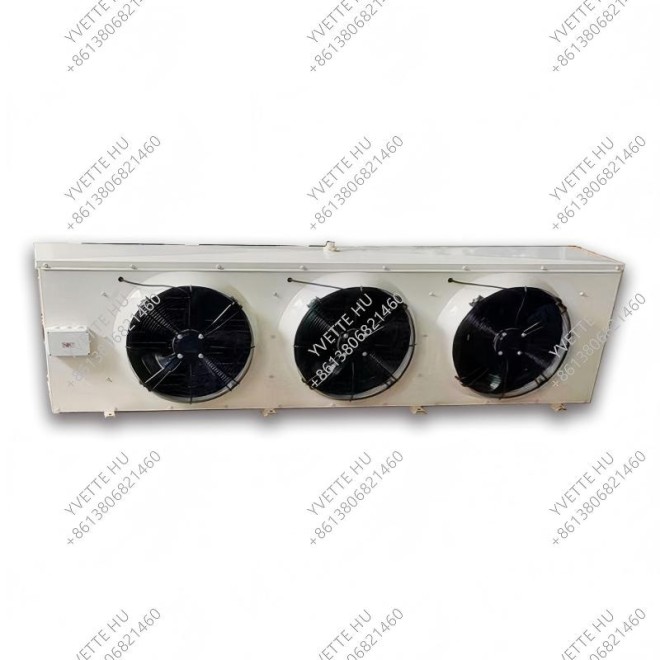
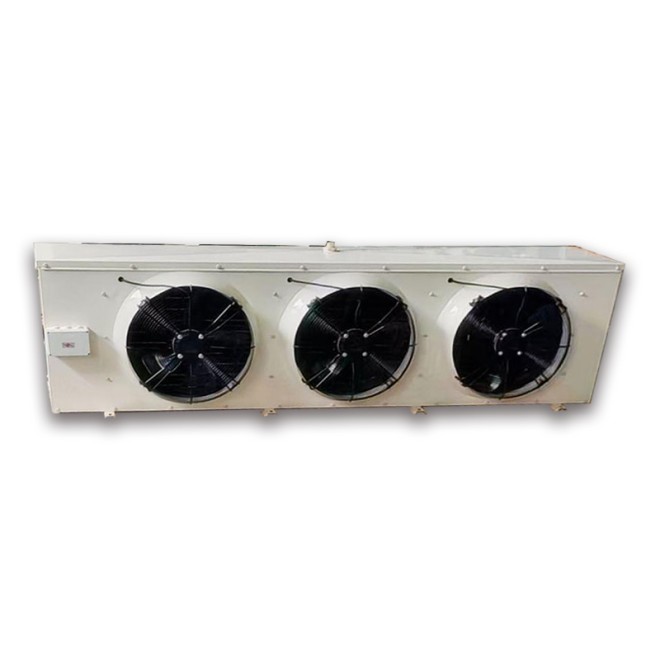
Explore our complete lineup of semi-hermetic condensing units, screw compressor assemblies, air coolers, PU insulation panels, and container reefer replacement electronics.