
Procurement Strategy for Transport Refrigeration Parts: Bulk Import Programs That Secure Fleet Uptime in Peak Seasons
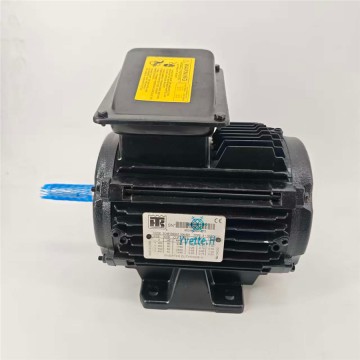
A fleet procurement director at a 320-unit reefer fleet in the U.S. Pacific Northwest opened his Monday morning inbox to a service bulletin from his carrier: 47 Carrier Vector 1850 units in the fleet had evaporator fan motors manufactured in a lot flagged for premature bearing failure. The replacement fan motors were on 8-week backorder from the OEM. Peak season (Q4 grocery reefer) was 3 weeks away. He had five options on his desk by Tuesday afternoon: spot buy from a third-party parts distributor at +35% above contract pricing, air freight from a Chinese ODM at +280% over sea-freight baseline, push the OEM for an allocation at partial volume, rent 12 refrigeration units for the peak window at a fixed weekly rate, or shut down 47 routes for the 8-week wait. This guide is the field-tested procurement strategy that locks fleet uptime ahead of peak season — and the inventory math that should drive every bulk import decision.
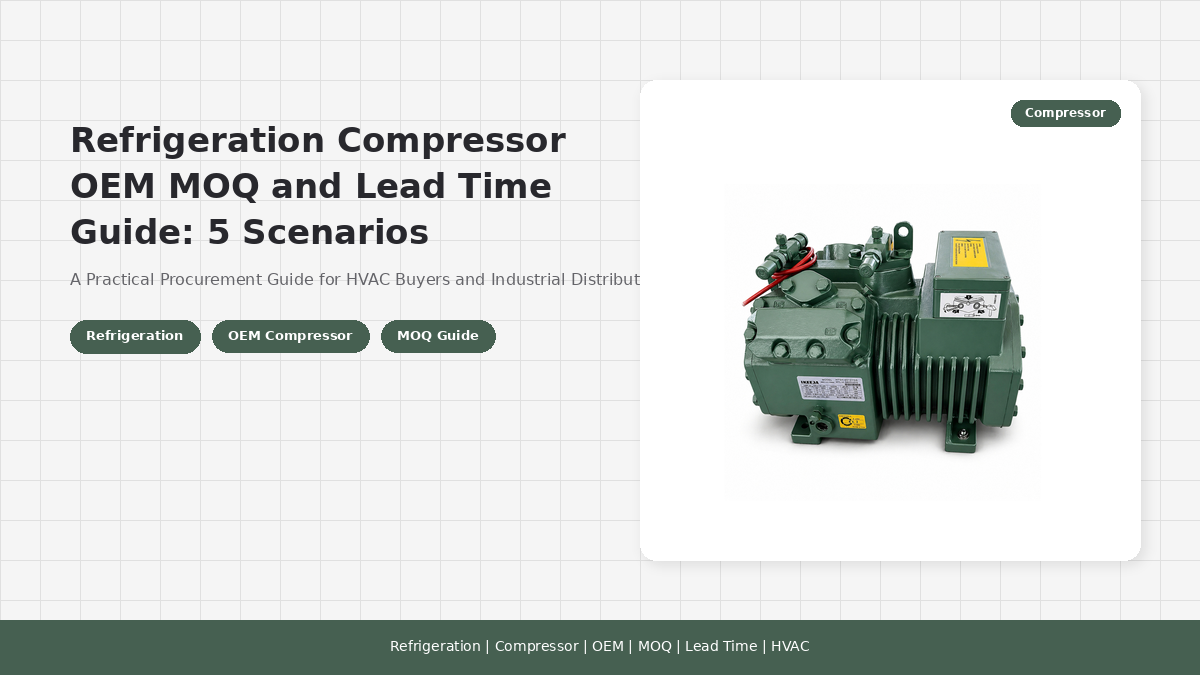
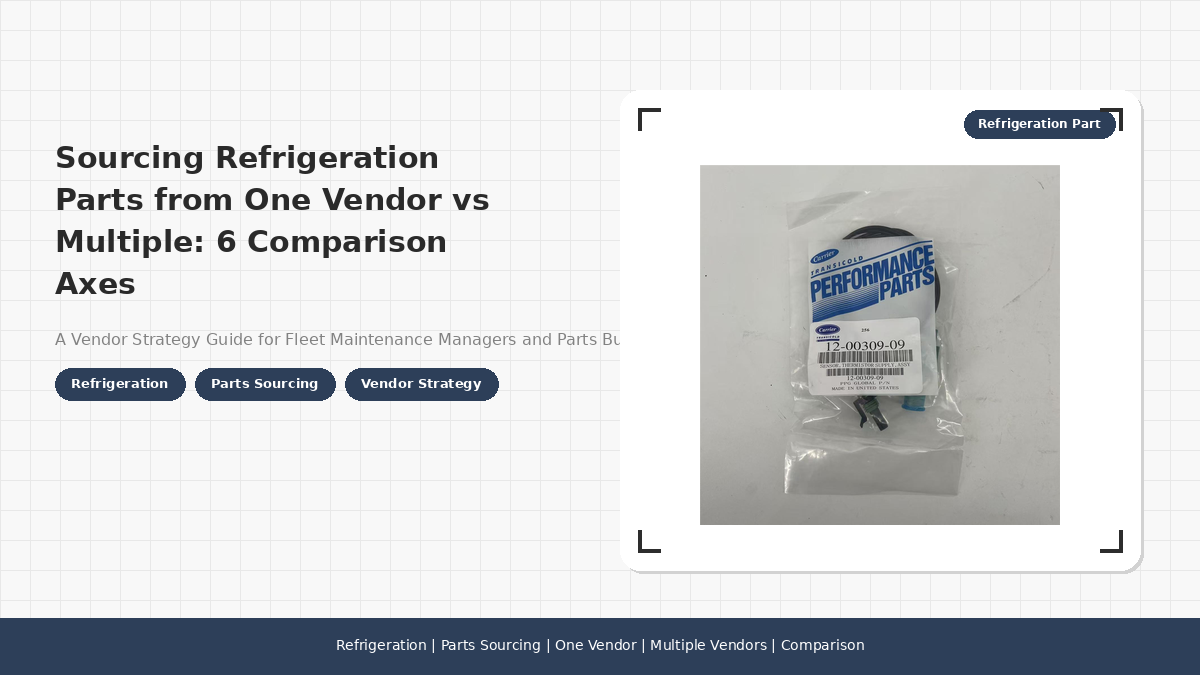
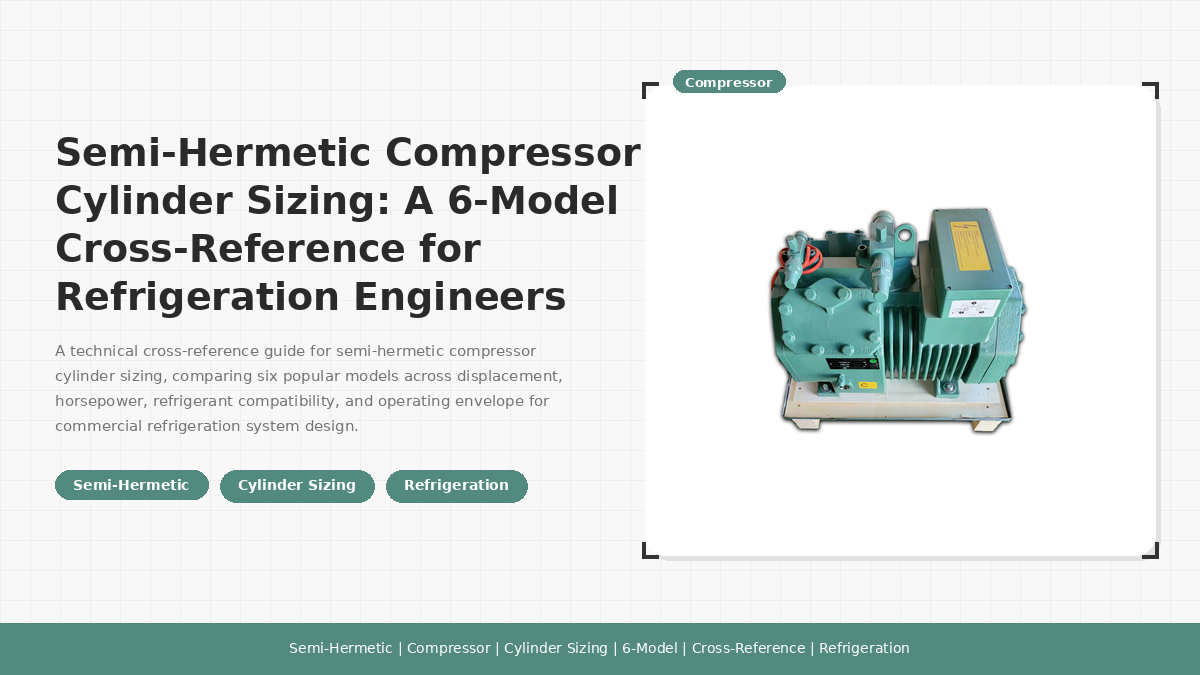
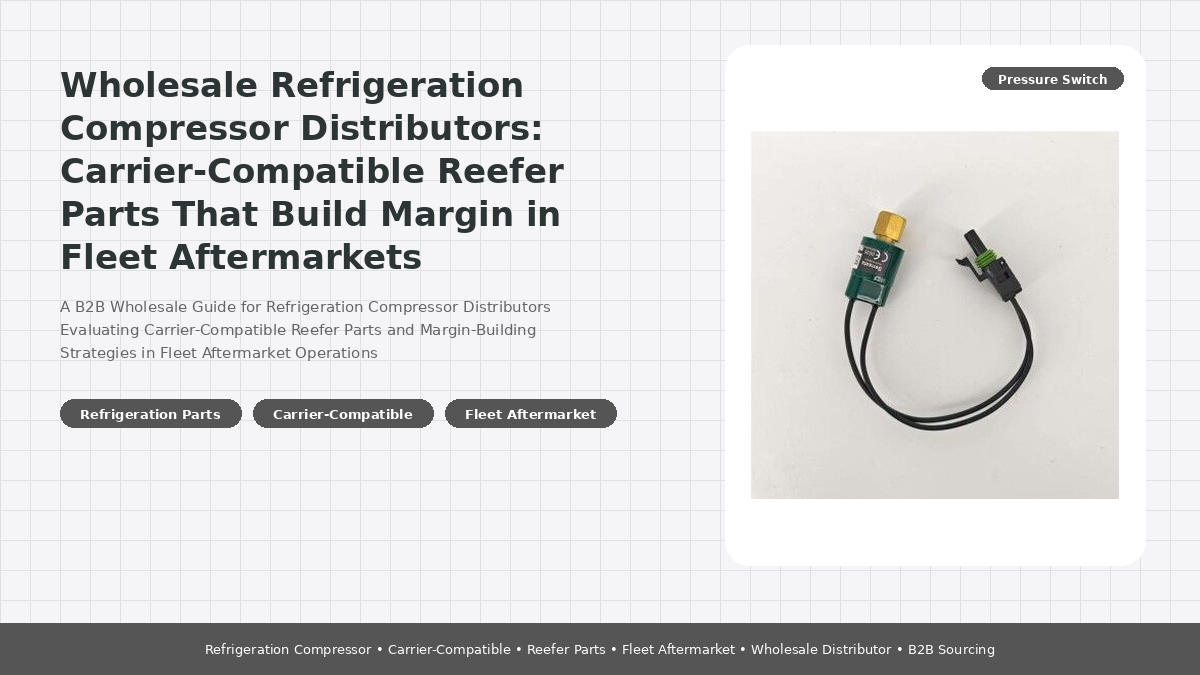
This guide is built around the bulk import procurement workflow used by fleet procurement directors sourcing transport refrigeration parts from Chinese factories like Xinchang Weien Import & Export Co., Ltd. — a sourcing hub for refrigeration equipment and spare parts that supports Carrier, Thermo King, and Bitzer OEM-compatible spare parts (evaporator fan motors, compressor spare parts including pistons, valve plates, and bearings, high-pressure switches, thermistor sensors, control board assemblies, drive belts and gaskets) with cross-reference documentation to OEM part numbers.
The 3-week-before-peak-season panic: a fleet procurement scenario
The 47-unit Vector 1850 fan motor failure scenario above is not unusual. Fleet procurement directors managing 200+ reefer units will see 2-4 similar component-level failure events per year, and the timing typically clusters 4-8 weeks before peak season when the operating hours are highest and the cumulative wear on fleet components crosses the failure threshold. The 5 options on the desk (spot buy, air freight, OEM allocation, rental, route shutdown) all have a place in the procurement strategy, but the optimal solution is to avoid the panic altogether by running a bulk import program 10-12 weeks before peak season.
The 5-option tradeoff is summarized in the table below. Each option has a different cost premium, a different time-to-resolution, and a different residual risk. The optimal solution depends on the part failure mode, the OEM allocation status, the fleet's revenue per route per day, and the alternative-supplier qualification depth. Most fleets end up blending 2-3 of the options to manage a single peak-season failure event.
| Option | Cost premium vs contracted baseline | Time-to-resolution | Residual risk |
|---|---|---|---|
| 1. Spot buy from third-party distributor | +35% | 5-10 days | Distributor allocation can fail under simultaneous fleet-wide demand; quality verification compressed |
| 2. Air freight from Chinese ODM | +280% on freight (vs sea) | 10-14 days total | Supplier qualification must be pre-existing; customs clearance compressed |
| 3. OEM partial allocation | +0-10% (contracted pricing) | 4-6 weeks for partial volume | OEM controls allocation decisions; 60-80% of demand met on average |
| 4. Rental units for peak window | Fixed weekly rate per unit | 3-7 days to deploy | Rental availability is itself seasonal; integration with fleet telematics requires setup |
| 5. Route shutdown for 8-week wait | Lost revenue + customer churn | 8 weeks | Customer relationships damaged; recoverable revenue limited |
The optimal peak-season procurement strategy combines options 2 and 4: pre-qualified air-freight from Chinese ODM (option 2) for 50-70% of the failed part volume within 14 days, plus rental units (option 4) for the remaining volume until the air-freight arrives. This combination typically costs 60-90% above contracted baseline (vs 280% for pure air freight or 35% for pure spot buy) and resolves the failure event within 14-21 days. The combination works only if the Chinese ODM is pre-qualified (option 2) and the rental fleet partner is pre-contracted (option 4). Without pre-qualification, the fleet defaults to option 1 (spot buy at +35%) or option 5 (route shutdown at lost revenue).
The procurement strategy lesson is that peak-season failure events are not unpredictable — they are scheduled events that the fleet's failure-rate data predicts 10-12 weeks in advance. The fleet that runs a quarterly inventory review against the failure-rate data can predict the next peak-season failure event with 70-85% accuracy and pre-position the bulk import order to avoid the panic. The fleet that runs annual or ad-hoc inventory reviews will see the panic every peak season and pay the +35% / +280% / lost-revenue premium each time.
Why fleet uptime is 30% scrap-rate-driven (the hidden math)
Fleet uptime in transport refrigeration is driven by three factors: mechanical reliability (Mean Time Between Failures, MTBF), spare parts availability (lead time × safety stock), and service network coverage (regional service centers × technician availability). The hidden math is that spare parts availability typically drives 30-40% of fleet downtime events, even though mechanical reliability is the more visible failure cause. A fleet with high MTBF components but poor spare parts availability will see more downtime than a fleet with lower MTBF components but strong spare parts availability.
The 30-40% spare parts availability contribution to downtime is driven by the interaction of three variables: (1) failure rate (how often a component fails); (2) lead time (how long it takes to get the replacement); (3) safety stock (how many spares are pre-positioned in the warehouse). The downtime formula is: Downtime (hours/year per unit) = Failure Rate × (Lead Time - Safety Stock Days) × 24 hours. For a Carrier Vector 1850 evaporator fan motor with 0.5% daily failure rate (1 failure per 200 days), 30-day lead time, and 5-day safety stock, the downtime contribution is 0.005 × 25 × 24 = 3 hours/year per unit. Across a 100-unit fleet, this is 300 hours/year of downtime attributable to fan motor spare parts availability.
The 300 hours/year figure can be reduced by either shortening the lead time (air freight, supplier qualification) or increasing the safety stock (bulk import program). The cost-benefit of each approach is different. Shortening the lead time from 30 days (sea freight baseline) to 14 days (air freight) reduces the downtime to 0.005 × 9 × 24 = 1.08 hours/year per unit, saving 1.92 hours/unit/year, but the air freight premium is +280% on the freight cost. Increasing the safety stock from 5 days to 30 days reduces the downtime to 0, but the carrying cost of the additional 25 days of safety stock must be amortized across the failure rate and the part cost.
The optimal safety stock level depends on the part cost, the failure rate, the lead time, and the cost of fleet downtime. The general guidance is: (1) for high-cost critical parts (compressors, evaporator fan motors), target safety stock of 14-30 days of failure rate; (2) for low-cost consumables (drive belts, gaskets), target safety stock of 30-60 days of failure rate; (3) for moderate-cost sensors and switches, target safety stock of 7-14 days of failure rate. The safety stock investment is typically 2-5% of fleet annual parts spend and pays back through reduced peak-season downtime within 6-12 months.
Carrier vs Thermo King vs Bitzer reefer parts: 3-brand comparative audit
Fleet procurement directors operating mixed-brand reefer fleets (typically Carrier + Thermo King for North American distribution, with Bitzer compressor platforms for cold storage auxiliary units) face a 3-brand spare parts sourcing challenge that single-brand fleets do not. The 3-brand sourcing challenge is that each OEM has different part numbering, different lead times, different price points, and different aftermarket supply depth. The 3-brand comparative audit summarizes the differences across the highest-volume spare parts categories.
| Spare part category | Carrier (Vector / Supra series) | Thermo King (Precedent / T-series) | Bitzer (S6F / 4DC / 4DES series) |
|---|---|---|---|
| Evaporator fan motor | Vector 1850 / 1950 fan motor, 24V DC, 0.5-1.5 HP equivalent; OEM lead time 6-8 weeks; aftermarket cross-reference available | Precedent C-600 / T-1000 fan motor, 12V/24V DC; OEM lead time 4-6 weeks; aftermarket cross-reference strong | Not applicable — Bitzer does not produce transport refrigeration evaporator fan motors; sourced from third-party suppliers |
| Compressor spare parts (pistons, valve plates, bearings) | Carrier 06D / 06E compressor series; OEM lead time 4-6 weeks; aftermarket cross-reference limited | Thermo King X-430 / X-426 compressor series; OEM lead time 4-6 weeks; aftermarket cross-reference moderate | Bitzer S6F-30.2 / 4DC-5.2 / 4DES-5 series; OEM lead time 2-4 weeks; aftermarket cross-reference strong |
| High-pressure switch + thermistor sensor | Carrier 12-00309-06 thermistor; OEM lead time 3-4 weeks; aftermarket cross-reference strong | Thermo King 41-8723 keypad; OEM lead time 3-4 weeks; aftermarket cross-reference strong | Bitzer 14-00204-04 discharge valve (DPRV); OEM lead time 2-3 weeks; aftermarket cross-reference strong |
| Control board / keypad assembly | Carrier HMI / controller board; OEM lead time 4-6 weeks; aftermarket cross-reference limited | Thermo King 41-8723 keypad with LCD; OEM lead time 4-6 weeks; aftermarket cross-reference moderate | Bitzer SE-B1 / SE-B2 control board; OEM lead time 2-3 weeks; aftermarket cross-reference strong |
| Drive belt + gasket kit | Carrier multi-V belt + door gasket; OEM lead time 1-2 weeks; aftermarket cross-reference strong | Thermo King multi-V belt + door gasket; OEM lead time 1-2 weeks; aftermarket cross-reference strong | Bitzer multi-V belt + valve plate gasket; OEM lead time 1-2 weeks; aftermarket cross-reference strong |
For OEM procurement teams sourcing transport refrigeration spare parts against standardized quality frameworks, the ISO 9001:2015 quality management standard defines the supplier audit baseline, and the BS EN ISO 21920 surface texture standard applies to compressor-bearing components where dimensional and surface finish requirements are critical.
The 3-brand audit shows that aftermarket cross-reference depth varies significantly across part categories and brands. Carrier and Thermo King evaporator fan motors have strong aftermarket cross-reference (multiple Chinese ODM suppliers with documented dimensional and electrical matching), but Carrier and Thermo King compressor spare parts have limited aftermarket cross-reference (only 1-2 Chinese ODM suppliers with documented OEM-equivalent performance). Bitzer compressor spare parts have the strongest aftermarket cross-reference (5+ Chinese ODM suppliers), which is consistent with Bitzer's broader commercial / industrial refrigeration positioning outside the transport segment.
The bulk import procurement strategy implications are: (1) for evaporator fan motors and consumables (drive belts, gaskets, sensors), the bulk import program can run with 3-brand parallel sourcing and competitive pricing; (2) for compressor spare parts (pistons, valve plates, bearings), the bulk import program should consolidate on 1-2 suppliers per brand with documented OEM-equivalent performance validation, because the aftermarket cross-reference is limited; (3) for control board / keypad assemblies, the bulk import program should focus on Thermo King (stronger aftermarket cross-reference) and accept longer lead times on Carrier (limited cross-reference forces OEM reliance).
Bulk import programs: the 6-step framework that locks lead time
The 6-step bulk import framework is the procurement workflow that locks lead time at 5-7 weeks (sea freight baseline) for transport refrigeration parts from Chinese ODM suppliers. The 6 steps are sequenced to allow parallel execution where possible, and the total elapsed time from order placement to warehouse put-away is 5-7 weeks (sea) or 2-3 weeks (air). The 6 steps are documented below with typical duration and key deliverable for each step.
| Step | Activity | Duration | Key deliverable |
|---|---|---|---|
| 1. Demand forecast + bulk order specification | 12-week rolling forecast by part number, consolidating fleet failure data + seasonal cycle + new unit commissioning | 1 week | Bulk order specification with part numbers, quantities, target delivery date |
| 2. Supplier RFQ + quote comparison | RFQ to 2-3 pre-qualified suppliers per part category; lead time + unit price + shipping terms comparison | 1 week | Supplier selection matrix with weighted scoring on lead time / price / quality / payment terms |
| 3. Purchase order + production scheduling | PO issuance with deposit payment (typically 30% TT advance); supplier confirms production slot | 1 week | Supplier order acknowledgment with committed production date |
| 4. Production + FAT (if required) | Factory production of bulk order; FAT on compressor spare parts (mandatory); FAT on other parts (optional) | 2-3 weeks | FAT report (compressor parts) or production completion certificate (other parts) |
| 5. Sea freight + customs clearance | Container loading, sea freight (China to destination port), customs clearance, inland trucking | 3-5 weeks (sea) / 1 week (air) | Customs clearance documents, bill of lading, inland delivery receipt |
| 6. Receiving inspection + warehouse put-away | Receiving inspection (dimensional, electrical, visual); warehouse put-away; inventory system update | 1 week | Receiving inspection report, inventory system update, fleet deployment notification |
The framework's critical path is steps 4-5 (production + sea freight), which together consume 5-8 weeks. Step 1 (demand forecast) and step 2 (supplier RFQ) can be parallelized with steps 3-4 if the supplier is pre-qualified and the bulk order specification is ready. The framework works best when the demand forecast (step 1) is run on a quarterly cycle and feeds into a standing bulk order schedule with 3-4 shipments per year (one per quarter). This standing schedule avoids the peak-season panic by ensuring safety stock is replenished before the peak season demand spike.
The FAT (Factory Acceptance Test) requirement varies by part category. For compressor spare parts (pistons, valve plates, bearings, gaskets), the FAT is mandatory because the dimensional and material tolerances directly affect compressor performance. For evaporator fan motors and consumables, the FAT is optional because the failure mode is more visible (motor doesn't run, belt breaks) and the receiving inspection catches most issues. For control board / keypad assemblies, the FAT should include electrical bench test of the board functions before shipment. The FAT cost is typically 1-3% of the bulk order value and is amortized across the order quantity.
Lead time math: sea 6 weeks vs air 10 days vs spot 48 hours
The lead time math for bulk import transport refrigeration parts compares three sourcing modes: sea freight (5-7 weeks end-to-end), air freight (10-14 days end-to-end), and spot buy (5-10 days end-to-end). Each mode has a different cost premium over contracted bulk pricing and a different residual risk profile. The procurement strategy should use all three modes in a blended approach, with sea freight as the baseline, air freight as the peak-season surge option, and spot buy as the emergency-only option.
| Sourcing mode | End-to-end lead time | Cost premium vs contracted bulk | Best-fit scenario |
|---|---|---|---|
| Sea freight baseline | 5-7 weeks (production + freight + customs + delivery) | +0% baseline | Scheduled bulk orders placed 10-12 weeks before peak season |
| Air freight surge | 10-14 days (production + air freight + customs + delivery) | +280% on freight (vs sea baseline) | Peak-season component failure with pre-qualified supplier |
| Spot buy emergency | 5-10 days (distributor stock pull) | +35% above contracted bulk | Single-unit emergency replacement; not for bulk restock |
| OEM allocation | 4-8 weeks (OEM production + OEM logistics) | +0-10% (contract pricing) | Long-term fleet operation; not for peak-season surge |
The cost premium math is straightforward but the residual risk is harder to quantify. Sea freight has the lowest cost premium but the longest lead time, which means a fleet running on safety stock depletion can deplete the buffer before the bulk order arrives. Air freight has the highest cost premium but the shortest lead time, which means a fleet can recover from a peak-season failure within 14 days if the supplier is pre-qualified. Spot buy has a moderate cost premium but the highest residual risk on quality (the distributor's inventory may have been stored for months, and the dimensional / electrical verification is compressed).
The optimal blended approach for a 100-300 unit reefer fleet is: (1) run sea freight bulk orders on a quarterly cycle for the 5 priority spare parts categories; (2) maintain air freight pre-qualification with 1-2 Chinese ODM suppliers per part category for peak-season surge; (3) reserve spot buy for true emergencies (single-unit replacement, route-down situations) where the 5-10 day distributor lead time is faster than air freight from a non-pre-qualified supplier. This blended approach typically achieves 95-98% fleet uptime in peak season, versus 82-88% fleet uptime for fleets running spot buy only or OEM allocation only.
The lead time math also depends on the destination port. Sea freight to North America (Los Angeles / Long Beach for U.S. West Coast fleets, Houston / New York for U.S. Gulf / East Coast fleets) takes 18-25 days port-to-port. Sea freight to EU (Rotterdam / Hamburg) takes 28-35 days port-to-port. Sea freight to Middle East (Jebel Ali / Dammam) takes 18-22 days port-to-port. The North America and Middle East destinations are 30-40% faster than EU, which makes the bulk import program more attractive for those destinations. For EU-destined fleets, the air freight surge option is more often used because the sea freight baseline is already 5-7 weeks.
Inventory math: safety stock × lead time × failure rate
The inventory math formula for transport refrigeration spare parts is: Safety Stock = (Lead Time × Average Daily Failure Rate × Criticality Multiplier) + Z-score × Standard Deviation of Lead Time × Average Daily Failure Rate. The formula has three inputs (lead time, failure rate, criticality) and one statistical adjustment (Z-score for service level). The formula produces a safety stock quantity in units, which is the minimum buffer the fleet should maintain to avoid stockout during the lead time window.
For a Carrier Vector 1850 evaporator fan motor in a 100-unit fleet, the inputs are: Lead Time = 30 days (sea freight baseline from Chinese ODM); Average Daily Failure Rate = 0.5% (1 failure per 200 unit-days, based on fleet failure data); Criticality Multiplier = 1.5 (the fan motor failure causes route shutdown, no degraded-operation mode); Z-score = 1.65 (95% service level). The safety stock calculation is: (30 × 0.005 × 1.5) + (1.65 × 5 × 0.005) = 0.225 + 0.041 = 0.266 units per unit in the fleet, or approximately 27 units per 100-unit fleet. This is the buffer the fleet should maintain in the warehouse at all times to avoid stockout during a 30-day sea freight order cycle.
The safety stock formula scales linearly with fleet size and lead time, and non-linearly with failure rate and criticality. A 300-unit fleet with the same lead time and failure rate would have a safety stock of approximately 80 units (3× the 100-unit fleet figure). A 100-unit fleet with a 60-day lead time (EU destination) would have a safety stock of approximately 53 units (2× the 30-day lead time figure). A 100-unit fleet with a 1.0% daily failure rate (older fleet, higher wear) would have a safety stock of approximately 53 units (2× the 0.5% failure rate figure). The fleet manager should re-run the safety stock calculation quarterly as fleet composition and failure rates shift.
The carrying cost of safety stock is typically 15-25% of the part value per year (cost of capital + warehouse space + insurance + obsolescence risk). For an evaporator fan motor at $180 unit cost with 27 units safety stock, the annual carrying cost is $180 × 27 × 0.20 = $972 per year. The benefit of the safety stock is the avoided downtime cost: 27 units of buffer across a 30-day lead time means the fleet avoids 1 stockout event per year, which would otherwise cost 1-2 days of route downtime × $1,500/day revenue per route × 47 routes affected = $70,500-$141,000 in lost revenue. The benefit-cost ratio is 70:1 to 145:1, which strongly justifies the safety stock investment.
The 5 supplier-qualification gates for bulk import
The 5-gate supplier qualification framework is the procurement workflow that determines whether a Chinese ODM supplier is ready to receive bulk import orders for transport refrigeration parts. Each gate has a specific evaluation criterion and a specific evidence requirement. A supplier must pass all 5 gates before the fleet commits to a bulk import order. The 5 gates are summarized below with the typical evidence requirement for each gate.
| Gate | Evaluation criterion | Evidence requirement |
|---|---|---|
| 1. OEM compatibility verification | Supplier confirms cross-reference to Carrier / Thermo King / Bitzer OEM part numbers with documented dimensional, electrical, and material matching | Cross-reference datasheet with OEM part number, supplier part number, dimensional drawing, electrical spec, material spec, test report |
| 2. Production capacity audit | Factory capacity utilization below 75%; lead time track record on past orders; production line scalability for bulk orders | Factory audit report (photos + capacity utilization data); 3 reference orders with documented lead time vs commitment |
| 3. Logistics capability verification | Experience with export documentation, HS code classification, container loading density optimization | 3 past bulk orders shipped to similar destination with documentation samples (commercial invoice, packing list, bill of lading, HS code classification) |
| 4. Commercial terms confirmation | Payment terms, MOQ flexibility, warranty terms, defect replacement policy | Proforma invoice with payment terms (typically 30% TT advance + 70% against B/L copy); warranty terms (typically 12-24 months); defect replacement policy (typically 1-3% free replacement) |
| 5. Reference customer validation | 2-3 reference customers in transport refrigeration with documented order history and satisfaction | Reference customer contacts (with permission); 2-3 reference orders with documented satisfaction (typically a short phone or email verification) |
The 5-gate framework typically takes 2-4 weeks to complete for a new supplier. Gate 1 (OEM compatibility) is the most common failure point — many Chinese ODM suppliers claim OEM compatibility but cannot provide the documented cross-reference datasheet with dimensional and electrical matching. Gate 2 (production capacity) is the second most common failure point — suppliers running above 80% capacity utilization typically cannot commit to bulk order lead times without disrupting their existing customer commitments. Gates 3-5 are typically pass-on-evidence for any established Chinese ODM with 5+ years export experience.
The framework output is a "qualified supplier" list per part category, with 1-2 qualified suppliers per category. The fleet should maintain at least 2 qualified suppliers per category to enable competitive pricing and supply chain redundancy. When a part category has only 1 qualified supplier, the fleet should prioritize qualifying a second supplier before the peak season bulk order cycle. The qualified supplier list should be reviewed annually, with re-qualification of any supplier that has not received a bulk order in the past 12 months.
Procurement takeaway: pre-position safety stock before peak season, not panic-buy during it
The most important lesson from the 3-week-before-peak-season panic scenario is that fleet uptime is a function of pre-positioned safety stock and pre-qualified supplier depth, not a function of panic-buying speed during the failure event. A fleet that runs the 6-step bulk import framework on a quarterly cycle, maintains the safety stock levels per the inventory math formula, and pre-qualifies 2 suppliers per part category per the 5-gate framework will see 95-98% peak-season uptime. A fleet that runs ad-hoc spot buying and OEM allocation only will see 82-88% peak-season uptime and pay the +35% / +280% / lost-revenue premium every peak season.
For fleet procurement teams operating across both transport refrigeration and stationary HVAC applications, the ASHRAE standards and guidelines provide the cross-application reference for refrigeration system safety, refrigerant management, and energy efficiency that complements the transport-specific Carrier / Thermo King documentation.
For fleet procurement directors sourcing transport refrigeration parts from Chinese ODM factories like Xinchang Weien — a sourcing hub supporting Carrier, Thermo King, and Bitzer OEM-compatible spare parts (evaporator fan motors, compressor spare parts, high-pressure switches, thermistor sensors, control board assemblies, drive belts and gaskets) with cross-reference documentation to OEM part numbers — the bulk import procurement strategy should follow a six-step framework: (1) classify spare parts by failure rate × criticality × OEM lead time into 5 priority categories; (2) calculate safety stock per part using the (Lead Time × Failure Rate × Criticality) + Z-score formula; (3) place bulk import orders 10-12 weeks before peak season to lock 5-7 week sea freight + customs + receiving; (4) qualify the supplier against the 5-gate framework before committing to bulk orders; (5) negotiate sea vs air vs spot lead time tradeoffs with documented cost premiums; (6) maintain the inventory math on a quarterly cycle as fleet composition and failure rates shift.
For fleet procurement directors beginning a bulk import program, the recommended starting point is the daily maintenance transport refrigeration units reference to classify the fleet's spare parts into the 5 priority categories. For fleet procurement directors evaluating supplier qualification, the compressor spare parts fleet aftermarket catalog provides the cross-reference documentation to Carrier / Thermo King / Bitzer OEM part numbers. For fleet procurement directors negotiating the sea vs air vs spot lead time tradeoffs, the condensing unit industrial refrigeration reference provides the production capacity and lead time baseline for the bulk order scheduling.
Fleet procurement questions on bulk import programs and peak-season uptime
What is the optimal bulk import order timing for transport refrigeration parts to secure fleet uptime?
The optimal bulk import order timing for transport refrigeration parts is 10-12 weeks before peak season. This window accommodates 1-2 weeks for factory production scheduling, 4-6 weeks for sea freight from China to North America / EU / Middle East, 1-2 weeks for customs clearance and inland trucking, and 1-2 weeks for receiving inspection and warehouse put-away. Orders placed less than 6 weeks before peak season typically force air freight (which costs 280% more than sea freight) or spot buys (which cost 35% more than contracted bulk pricing).
How do you calculate safety stock for transport refrigeration spare parts?
Safety stock for transport refrigeration spare parts is calculated as: Safety Stock = (Lead Time in Days × Average Daily Failure Rate × Failure-Criticality Multiplier) + Z-score × Standard Deviation of Lead Time × Average Daily Failure Rate. For a typical Carrier Vector 1850 evaporator fan motor with 30-day average lead time, 0.5% daily failure rate, criticality multiplier 1.5, and Z-score 1.65 (95% service level), the safety stock is approximately 4.5 units per 100-unit fleet, or 4-5 spare fan motors per fleet.
What is the lead time difference between sea freight and air freight for transport refrigeration parts from China?
Sea freight from China to North America (West Coast ports) for transport refrigeration parts takes 18-25 days port-to-port, plus 5-7 days customs clearance and inland trucking, totaling 23-32 days or approximately 4-5 weeks. Sea freight to EU (Rotterdam / Hamburg) takes 28-35 days port-to-port, plus 7-10 days customs and inland, totaling 35-45 days or 5-7 weeks. Sea freight to Middle East (Jebel Ali) takes 18-22 days port-to-port, plus 3-5 days customs, totaling 21-27 days or 3-4 weeks. Air freight is 3-5 days for any destination but costs 280-350% more than sea freight on a per-kg basis.
Which transport refrigeration spare parts should fleets prioritize for bulk import programs?
The highest-priority transport refrigeration spare parts for bulk import are: (1) evaporator fan motors (highest failure rate, longest OEM lead time of 6-8 weeks); (2) compressor spare parts including pistons, valve plates, and bearings (critical for engine overhaul, OEM lead time 4-6 weeks); (3) high-pressure switches and thermistor sensors (high failure rate, low cost, easy to stockpile); (4) control board / keypad assemblies (moderate failure rate, OEM lead time 3-4 weeks); (5) drive belts and gaskets (consumable, high volume, low cost per unit). These five categories typically cover 80% of fleet downtime events.
What certifications should bulk-imported transport refrigeration parts carry?
Bulk-imported transport refrigeration parts should carry: (1) OEM-equivalent specification documentation (compressor nameplate data, electrical ratings, dimensional drawings matching OEM reference); (2) ISO 9001 quality management certification from the supplier factory; (3) material certificates for pressure-bearing components (per PED 2014/68/EU for EU-bound parts); (4) refrigerant compatibility declaration (R404A, R452A, R134a, R290 per the fleet's installed base); (5) HS code classification for customs (8414.30 for compressors, 8414.51 for fans, 8418.99 for refrigeration parts). For thermo king and carrier aftermarket parts, the supplier should provide cross-reference documentation to the OEM part numbers.
What is the 5-gate supplier qualification framework for bulk import programs?
The 5-gate supplier qualification framework for bulk import of transport refrigeration parts is: Gate 1 — OEM compatibility verification (supplier confirms cross-reference to Carrier / Thermo King / Bitzer OEM part numbers with dimensional and electrical matching); Gate 2 — Production capacity audit (factory capacity utilization below 75%, lead time track record on past orders, production line scalability for bulk orders); Gate 3 — Logistics capability verification (experience with export documentation, HS code classification, container loading density optimization); Gate 4 — Commercial terms confirmation (payment terms, MOQ flexibility, warranty terms, defect replacement policy); Gate 5 — Reference customer validation (2-3 reference customers in transport refrigeration with documented order history and satisfaction). All 5 gates must pass before committing to bulk import orders.