
Semi-Hermetic Compressor Cylinder Sizing: A 6-Model Cross-Reference for Refrigeration Engineers
Why Cylinder Cross-Referencing Matters in Semi-Hermetic Compressors
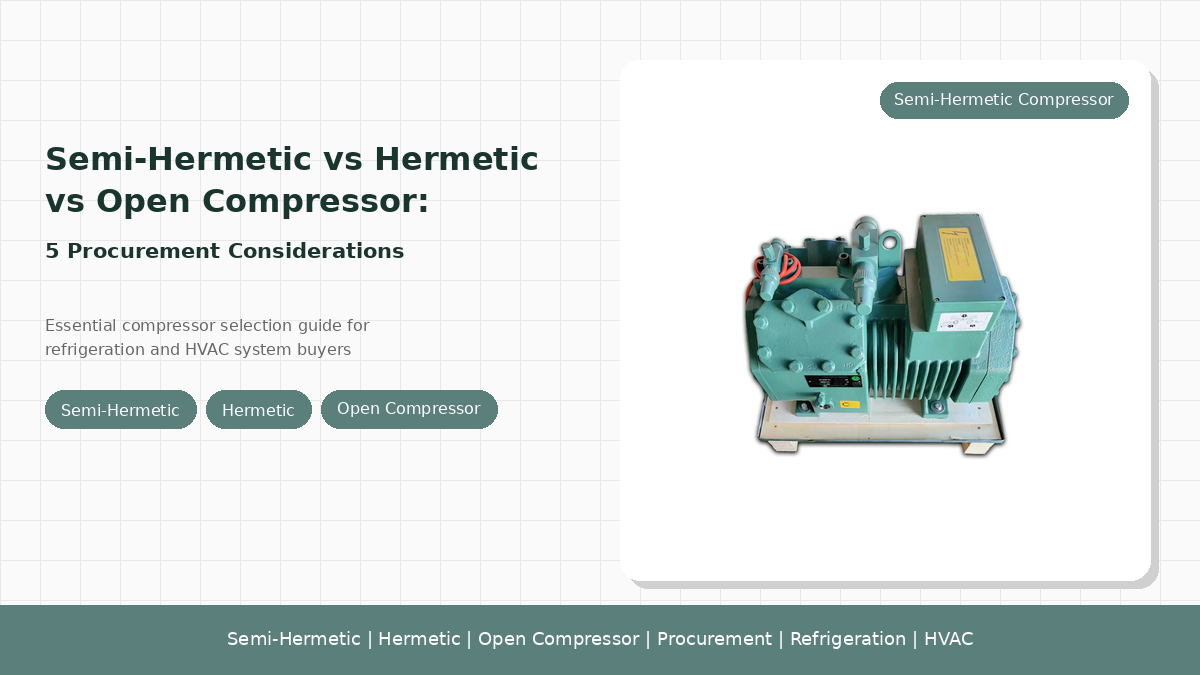
Semi-hermetic reciprocating compressors are the workhorses of commercial and industrial refrigeration. Unlike fully hermetic compressors (where the motor and compressor are permanently sealed in a welded shell), semi-hermetic units have a bolted housing that allows field service and cylinder replacement. This serviceability advantage means that procurement teams regularly need to cross-reference equivalent models across OEM families — for new equipment selection, spare parts inventory, or retrofit applications.
The Air-Conditioning, Heating, and Refrigeration Institute (AHRI) publishes standard ratings for refrigeration compressors, but AHRI ratings describe performance, not dimensional interchangeability. Engineers who need to replace a failed compressor often discover that "equivalent" models have different bolt patterns, valve locations, or electrical connections — making cross-referencing a precision exercise.
The 6-Model Cross-Reference Framework
The Weien semi-hermetic platform covers a broad capacity range. Here is a 6-model cross-reference covering displacement from roughly 5 m³/h to 80 m³/h — corresponding to typical applications from small commercial refrigeration to medium industrial cold rooms.
| Weien Model | Displacement (m³/h) | HP Range | Typical Application | Common Cross-Reference |
|---|---|---|---|---|
| 4DC-5.2 | 5.2 | 1.5-2 HP | Small cold rooms, display cases | Bitzer 4DC-5.2, Copeland D4DA, Frascold Q4-5.2Y |
| 4DES-5 | 5.0 | 1.5-2 HP | Walk-in coolers, process chilling | Bitzer 4DES-5, Copeland D4SJ, Frascold Q4-5.1Y |
| 4EES-6 | 6.0 | 2-3 HP | Medium cold rooms, food processing | Bitzer 4EES-6, Copeland D4DJ, Frascold Q4-6.2Y |
| 4FES-7 | 7.5 | 3-4 HP | Large cold rooms, industrial cooling | Bitzer 4FES-7, Copeland D4FH, Frascold Q4-7.5Y |
| 4GES-9 | 9.0 | 4-5 HP | Refrigerated warehouses, ice rinks | Bitzer 4GES-9, Copeland D4FL, Frascold Q4-9.2Y |
| 4HES-12 | 12.0 | 5-7 HP | Large industrial refrigeration | Bitzer 4HES-12, Copeland D4SH, Frascold Q4-12.2Y |
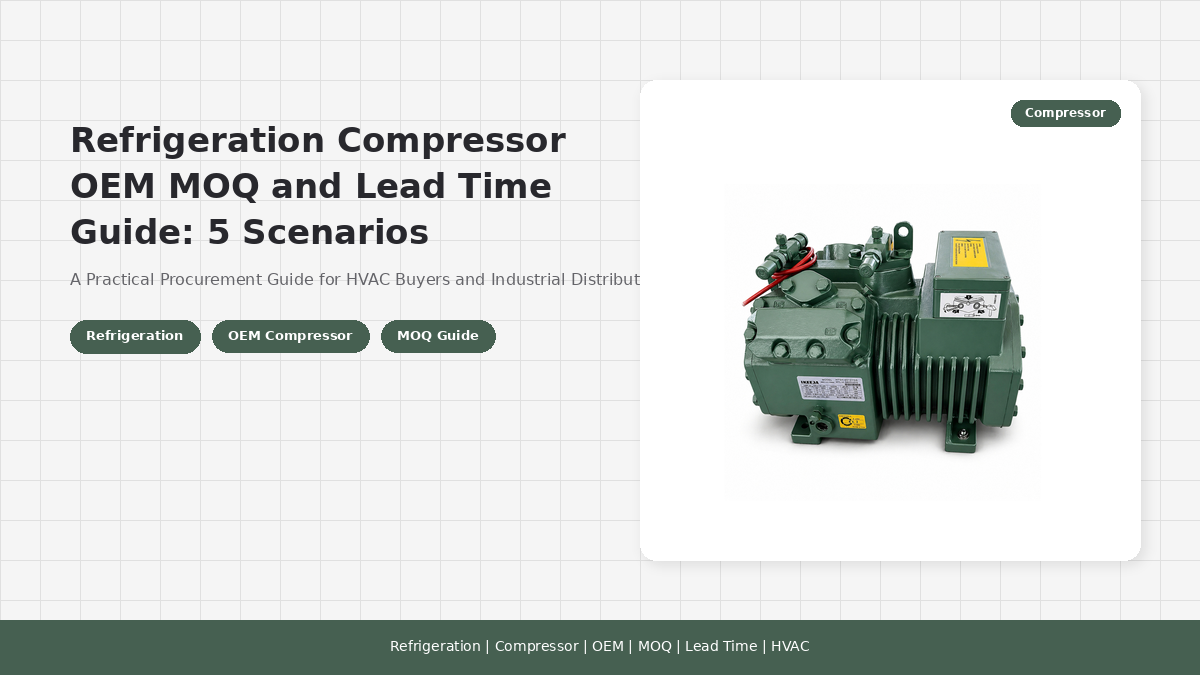
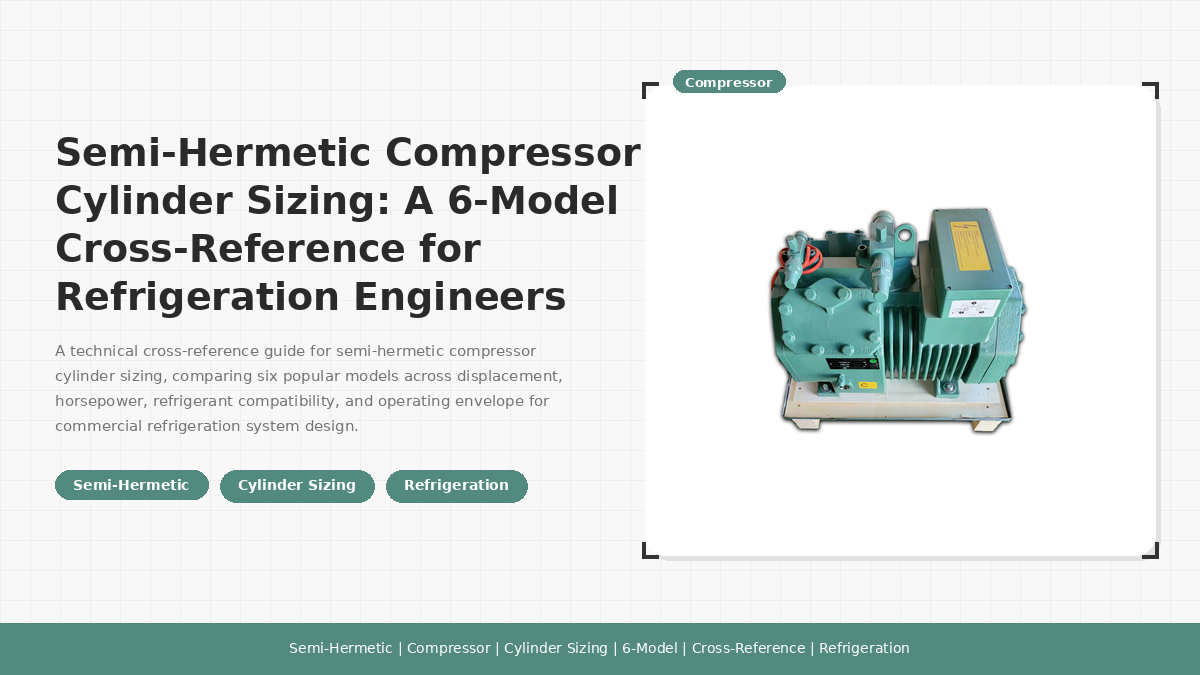
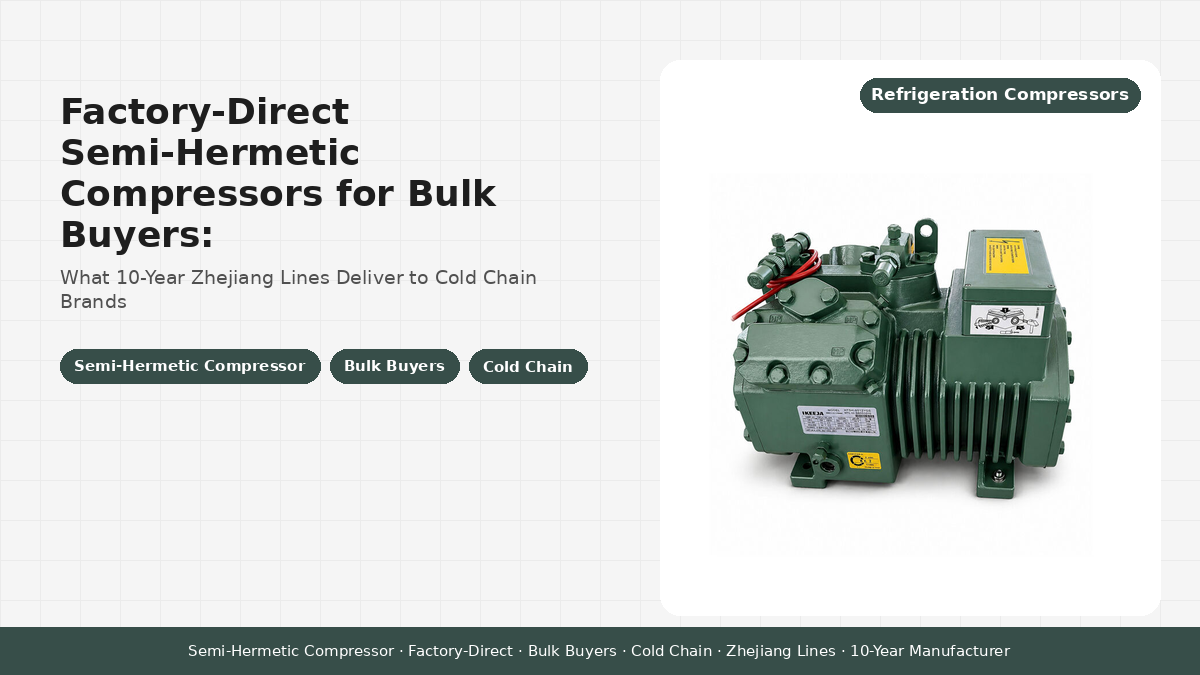
This 6-model framework covers the most common semi-hermetic configurations used in commercial and industrial refrigeration. The Weien semi-hermetic reciprocating compressor lineup extends from 2-cylinder units (2-cylinder, single-stage) up to 8-cylinder models for high-capacity applications.
Reference Model: Weien 4DC-5.2 / 4DES-5
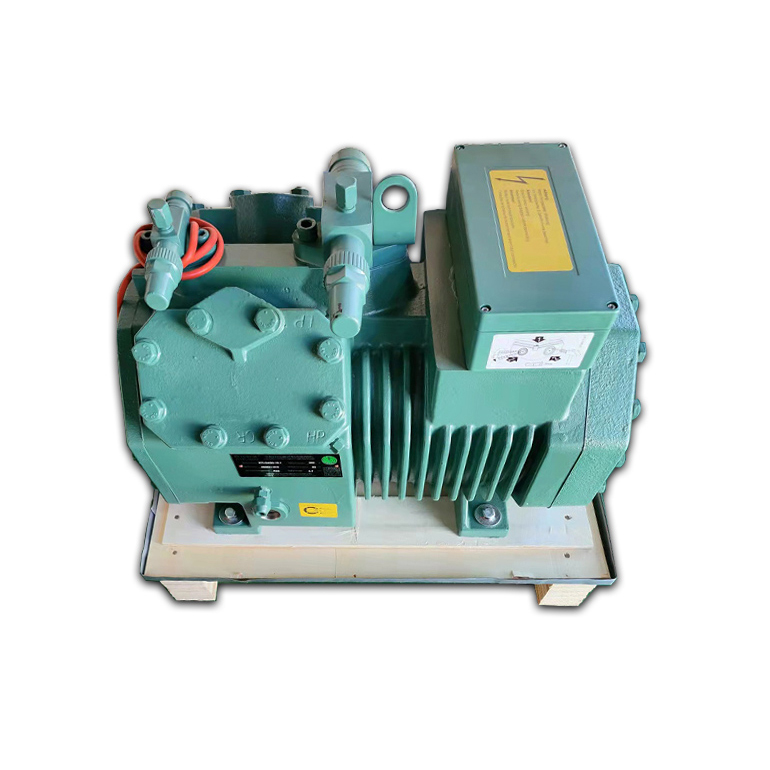
The 4DC-5.2 / 4DES-5 is a representative model in the 5 m³/h displacement class, suitable for 1.5-2 HP applications. Key specifications:
- Displacement: 5.2 m³/h at 50 Hz
- Motor power: 3 kW (approximately 5.5 HP input)
- Number of cylinders: 4 (2 for 4DC, 4 for 4DES in tandem configuration)
- Refrigerant compatibility: R-22, R-404A, R-507, R-134a (with appropriate lubricant)
- Application range: Commercial cold storage, walk-in coolers, process cooling, food retail refrigeration
This model is a direct replacement alternative for Bitzer 4DC-5.2 and 4DES-5 compressors, with matching bolt patterns, valve connections, and electrical specifications.
Understanding the Cylinder Numbering Convention
The Weien model numbering follows the industry-standard semi-hermetic nomenclature, which encodes key physical and capacity information in the model code:
| Position | Meaning | Example: 4DC-5.2 |
|---|---|---|
| First digit (4) | Number of cylinders | 4 cylinders |
| Letter (D) | Cylinder series (size class) | D = medium-small bore |
| Letter (C or S) | Configuration: C = single-stage, S = semi-hermetic tandem | C = single-stage |
| Number after dash (5.2) | Displacement in m³/h at 50 Hz | 5.2 m³/h |
For the 4DES-5: 4 cylinders, D series, E (larger bore than D), S (tandem = 2 compressors on one shaft for higher capacity), 5 m³/h displacement. This naming convention allows engineers to quickly identify capacity and configuration from the model code alone.
Selection Criteria: Matching Compressor to Application
Selecting the right compressor from the cross-reference table requires matching several application parameters:
1. Cooling Capacity Requirement
The compressor must deliver sufficient cooling capacity at the design condensing and evaporating temperatures. Calculate the required cooling load in kW, then select a compressor with rated capacity 10-20% above the design load to account for part-load operation and safety margin.
2. Refrigerant Compatibility
Verify the compressor is rated for the refrigerant used in the system. Common refrigerants for semi-hermetic compressors include R-22 (legacy), R-404A, R-507, R-134a, and newer low-GWP options like R-448A and R-449A. The EPA Section 608 regulations govern refrigerant handling, leak detection, and technician certification in the United States.
3. Operating Conditions
Check the compressor's operating envelope — maximum condensing temperature, minimum evaporating temperature, and maximum compression ratio. Standard semi-hermetic compressors typically operate between -40°C and +10°C evaporating and +35°C to +55°C condensing, depending on refrigerant.
4. Physical Dimensions and Connections
For retrofit applications, verify that the bolt pattern, suction line size, discharge line size, and electrical connections match the existing system. Cross-referenced models with similar capacity may have different physical specifications.
5. Motor and Electrical Compatibility
Verify motor voltage (380V/50Hz, 460V/60Hz, etc.) and starting method (DOL, star-delta, part-winding) match the electrical infrastructure. AHRI-certified compressors have standardized electrical performance characteristics, but physical wiring varies by OEM.
Displacement vs. Cooling Capacity
The relationship between compressor displacement and cooling capacity depends on operating conditions. The ASHRAE Standard 23 provides the test methods for rating refrigeration compressors. For a typical medium-temperature refrigeration application (evaporating -10°C, condensing +40°C, R-404A):
| Displacement (m³/h) | Approximate Cooling Capacity (kW) | Approximate HP Required |
|---|---|---|
| 5.0-6.0 | 3-4 kW | 1.5-2 HP |
| 6.0-8.0 | 4-6 kW | 2-3 HP |
| 8.0-10.0 | 6-8 kW | 3-4 HP |
| 10.0-15.0 | 8-12 kW | 4-5 HP |
| 15.0-25.0 | 12-20 kW | 5-7 HP |
These are approximate values for standard operating conditions. Actual capacity depends on the specific refrigerant, condensing temperature, and subcooling/superheat settings.
Cylinder Bore and Stroke: Why Model Numbers Matter
The cylinder bore diameter is a fixed dimension for each model series, while the stroke varies based on the number of cylinders. The Weien 4DC-5.2 has a bore of approximately 50mm with a stroke matched to achieve 5.2 m³/h displacement with 4 cylinders. The larger 4FES-7 uses a larger bore (~55mm) and longer stroke to achieve 7.5 m³/h.
When cross-referencing between OEMs, verify that the cylinder bore and stroke match or are close to the original. Different bore/stroke combinations can deliver the same displacement but with different valve sizes, connecting rod dimensions, and service intervals. The Weien engineering team can provide dimensional cross-reference data for specific OEM replacements.
Beyond Displacement: Engineering Considerations
Lubrication Systems and Oil Management
Semi-hermetic compressors use various lubrication approaches, and oil management is a key consideration for cross-referenced models:
- Splash lubrication: Common in smaller semi-hermetic models (2-4 cylinders). The crankshaft dips into the oil sump and throws oil onto the bearings and cylinder walls. Simple and reliable.
- Pressure lubrication: Used in larger semi-hermetic models. An oil pump driven by the crankshaft delivers pressurized oil to the main bearings.
- Oil cooling: Oil temperature management is critical for compressor reliability.
The Weien 4DC-5.2 uses splash lubrication with an oil sight glass for level monitoring. The oil capacity is approximately 1.5 liters, with a recommended oil change at 10,000 operating hours or annually.
Capacity Control Methods
Refrigeration systems rarely operate at full capacity continuously. Capacity control methods include:
- Cylinder unloading: 50-100% (2 steps) for simple on/off loads.
- Hot gas bypass: 10-100% continuous for variable load applications.
- Variable speed drive (VSD): 25-100% continuous for high-efficiency part-load operation.
The Weien 4DC-5.2 / 4DES-5 supports optional cylinder unloading for two-step capacity control. For wider capacity modulation, the compressor can be paired with a VSD system.
Electrical and Control Specifications
Cross-referenced compressor models may have different electrical specifications:
- Motor voltage: Common voltages include 380V/3-phase/50Hz, 460V/3-phase/60Hz. The Weien 4DC-5.2 ships with 380V/50Hz as standard.
- Starting method: DOL starting for motors up to 5HP. Larger motors use star-delta starting.
- Protection devices: Modern semi-hermetic compressors include internal motor protection and discharge temperature protection.
Sound and Vibration Considerations
The Weien 4DC-5.2 produces approximately 68 dB(A) at 1 meter in free-field conditions. Reciprocating compressors generate vibration at twice the running frequency. Spring isolators or rubber mounts are typically used for indoor installations.
Maintenance and Service Considerations
Routine Service Intervals
Semi-hermetic compressors require regular maintenance to achieve their full service life. The Weien 4DC-5.2 / 4DES-5 service schedule includes:
- Oil change: Every 10,000 operating hours or annually, whichever comes first
- Oil filter change: At each oil change (if equipped with external filter)
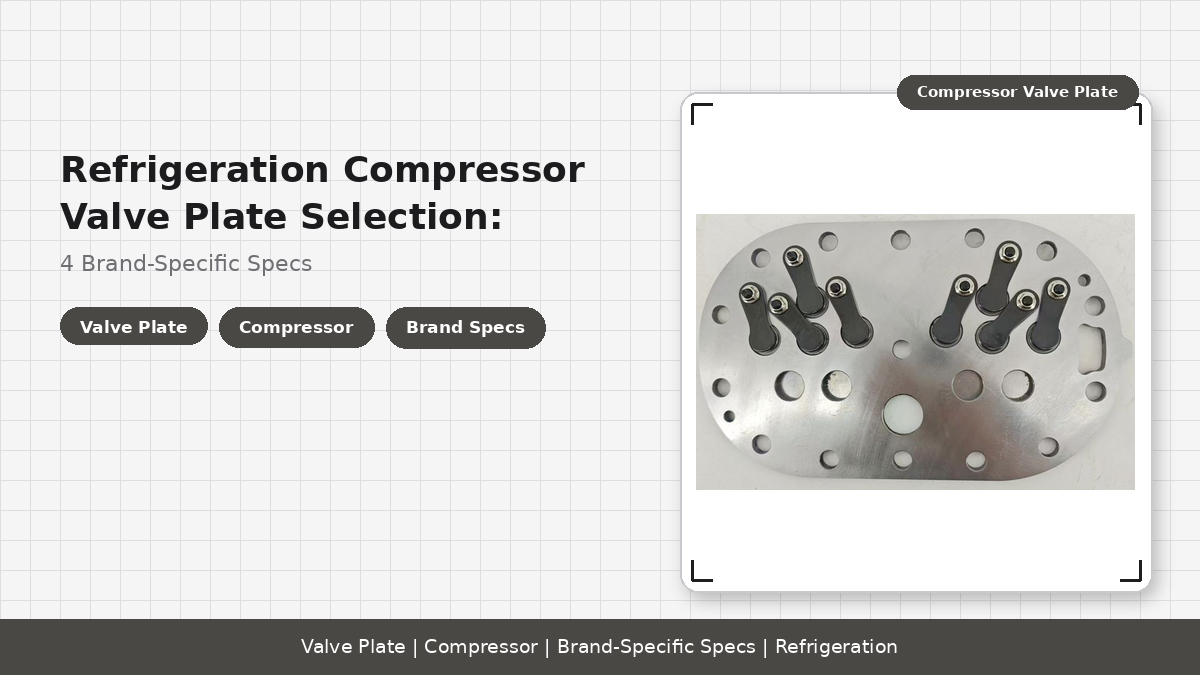
- Valve plate inspection: Every 20,000 hours or at first sign of performance degradation
- Bearing inspection: Every 40,000 hours or at major overhaul
- Motor winding test: Annually as preventive maintenance
Common Wear Items
Several components are considered wear items and should be stocked as service parts:
- Suction and discharge valve plates
- Valve reed springs
- Piston rings and cylinder gaskets
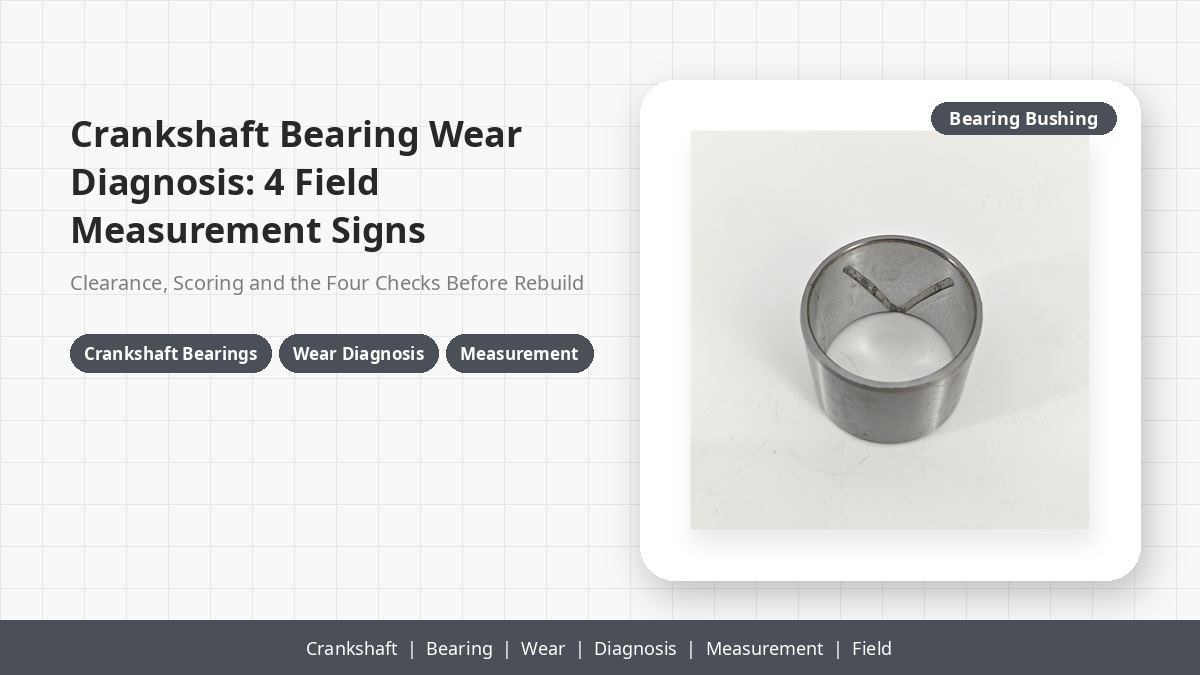
- Main bearing shells
- Connecting rod bearings
- Shaft seal gaskets
Overhaul vs. Replacement Decision
When a semi-hermetic compressor fails, the decision between overhaul and replacement depends on the failure mode, age, and condition:
- Overhaul typically makes sense when: The compressor is under 10 years old, the failure is limited to wear items (valves, bearings), and the motor is in good condition.
- Replacement typically makes sense when: The compressor is over 15 years old, the failure involves the motor winding or crankshaft, or the system requirements have changed.
Common Cross-Reference Scenarios
In practice, cross-referencing semi-hermetic compressors falls into three categories:
1. New Equipment Selection
When selecting a compressor for new equipment, procurement teams typically evaluate 2-3 candidates based on capacity, efficiency (COP/EER), physical dimensions, and price. The 6-model cross-reference framework above provides the initial shortlist.
2. Field Replacement
When a compressor fails in service, the priority is to identify a model that can be installed in the existing system with minimal piping and electrical modifications. Cross-referenced models with similar physical dimensions and connection points are ideal.
3. Spare Parts Inventory
For maintenance operations managing multiple compressor brands, a cross-reference table simplifies spare parts stocking. Common service parts like valve plates, connecting rods, and gaskets can often be shared between cross-referenced models.
Quality and Manufacturing Considerations
When evaluating cross-referenced compressor models, consider these quality factors beyond the basic specifications:
- Manufacturing standards: Verify that the compressor is manufactured to recognized quality standards (ISO 9001, AHRI certification).
- Materials: Cast iron cylinder bodies and forged steel crankshafts are standard for premium semi-hermetic compressors.
- Testing: Each compressor should be factory-tested for performance and leak-tightness before shipment.
- Warranty and support: Consider the OEM's warranty terms and the availability of service parts.
- Documentation: Operating manuals, service procedures, and parts lists should be available in the technician's language.
Weien's semi-hermetic compressors are manufactured to ISO 9001 standards and undergo full performance testing before shipment. The company also provides comprehensive English-language documentation for international customers.
Frequently Asked Questions
Both 4DC and 4DES are 4-cylinder semi-hermetic compressors from the same family, but with different bore sizes. The D (medium-small bore) and E (larger bore) designation indicates different displacement per cylinder. The 4DES uses tandem configuration (2 compressors on one shaft) for higher capacity, while the 4DC is single-stage. For practical purposes, both models can serve similar applications but with different efficiency and capacity profiles.
Yes, in many cases. Weien compressors are designed as direct replacements for the equivalent Bitzer and Copeland models listed in our cross-reference tables. The bolt patterns, valve connections, and electrical interfaces match the OEM models. For retrofit applications, we recommend confirming the dimensional drawings with our engineering team to ensure physical compatibility.
Calculate the total cooling load in kW based on the room size, product load, infiltration, and ambient temperature. Add 10-20% safety margin, then select a compressor with matching capacity at the design evaporating and condensing temperatures. Use the compressor selection software or consult with the Weien engineering team for complex applications.
The 4DC-5.2 / 4DES-5 is designed for use with R-22, R-404A, R-507, and R-134a refrigerants with appropriate lubricant selection. For newer low-GWP refrigerants like R-448A and R-449A, contact our engineering team to confirm compatibility for your specific application.
Semi-hermetic reciprocating compressors typically have a service life of 15-25 years with proper maintenance. Key maintenance items include periodic valve plate replacement, bearing inspection, and refrigerant oil changes. The semi-hermetic design allows these services to be performed in the field, extending the compressor's useful life significantly compared to fully hermetic units.
Fully hermetic compressors have the motor and compressor sealed in a welded steel shell that cannot be opened for service. Semi-hermetic compressors have a bolted housing that allows access to internal components (valves, bearings, motor windings) for field service. Semi-hermetic units are preferred for larger commercial and industrial applications where serviceability justifies the higher cost.
Weien maintains a comprehensive cross-reference database covering the most common European, American, and Asian compressor brands. For specific OEM replacement scenarios, contact our engineering team with the original compressor model number, and we can provide dimensional drawings, performance comparison, and installation guidance for the equivalent Weien model.
Related Resources
- Semi-Hermetic Reciprocating Compressors — Complete line of Weien semi-hermetic reciprocating compressors covering 2-8 cylinder configurations.
- 4DC-5.2 / 4DES-5 Product Page — Reference model specifications and application details.
- Contact Weien Engineering — Request dimensional cross-reference data for specific OEM replacement scenarios.