
Sourcing Refrigeration Compressors from One Vendor: Why One-Stop Supply Cuts Your Supplier Base from Five to One
Why Procurement Teams Are Cutting Their Compressor Supplier Base
A procurement manager at a European cold-storage integrator opened a spreadsheet in early 2026 and counted the active vendor relationships his team was managing for the refrigeration compressor scope. The number was thirty-one. Each relationship had its own purchase order process, its own quality audit document, its own warranty channel, its own logistics window, and its own monthly reconciliation meeting. The team's headcount had not grown in three years, but the vendor count had grown from twenty-two in 2023 to thirty-one in 2026 — a 40 percent increase in the relationship surface the team had to manage, on the same budget.
This is not an isolated case. Across the refrigeration compressor buyer base — cold-storage integrators, food-processing plant owners, pharmaceutical cold-chain operators, supermarket chain engineering teams — the same pattern is repeating. Multi-vendor specialisation made sense a decade ago, when the compressor OEMs were tightly specialised, the spare-parts distributors carried brands the OEMs did not, and the condensing-unit fabricators had unique certification scopes. In 2026, much of that specialisation has collapsed: the compressor OEMs carry similar efficiency ratings, the condensing-unit fabricators source similar control panels, and the spare-parts catalogues overlap. The five-vendor model is left carrying a relationship overhead it cannot justify on differentiation alone.
The trend toward one-stop supply is also driven by supply-chain disruption. Between 2020 and 2026, the refrigeration compressor industry experienced two semiconductor shortages, one refrigerant phase-down shock, and one shipping-container crunch. Each disruption exposed the weakness of multi-vendor relationships: when one vendor's delivery slipped, the buyer's recovery plan involved phone-calling four other vendors, none of whom carried the same part on the same timeline. A single one-stop vendor centralises that recovery plan in one call.
The Five Suppliers You Are Most Likely Working With Today
The "five suppliers" framing is not arbitrary. It reflects the actual structure of the refrigeration compressor procurement list for most industrial buyers. Walk through the bill-of-materials for a typical medium-temp cold-room condensing unit and the categories emerge by themselves.
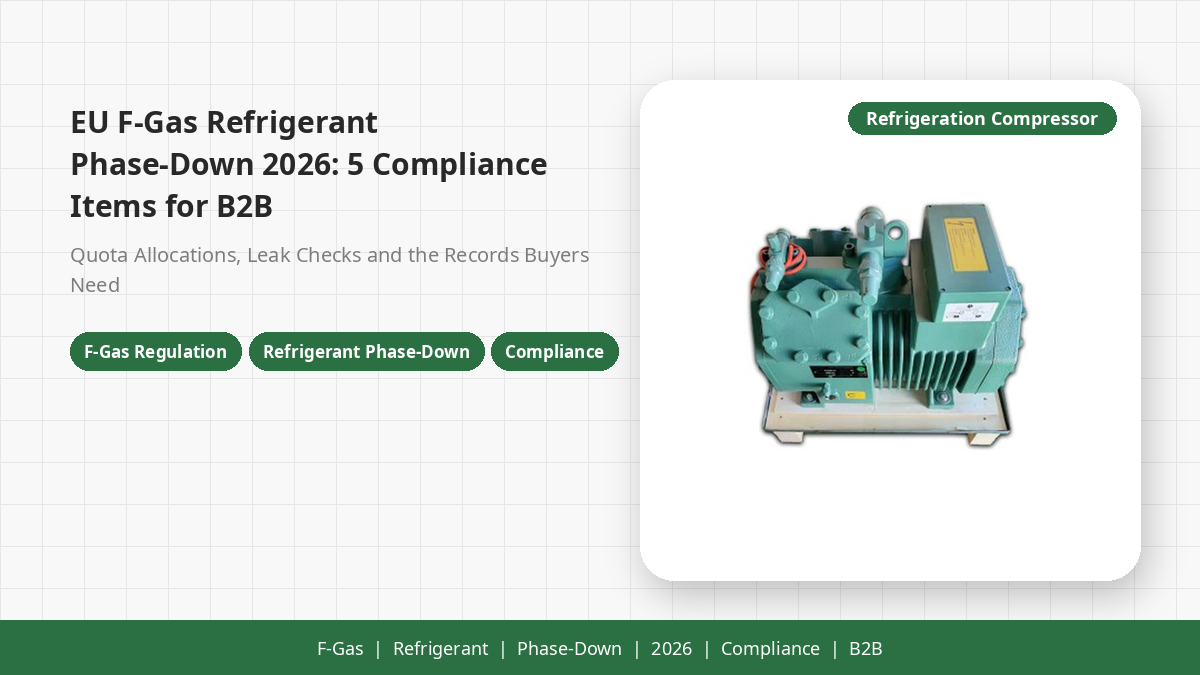
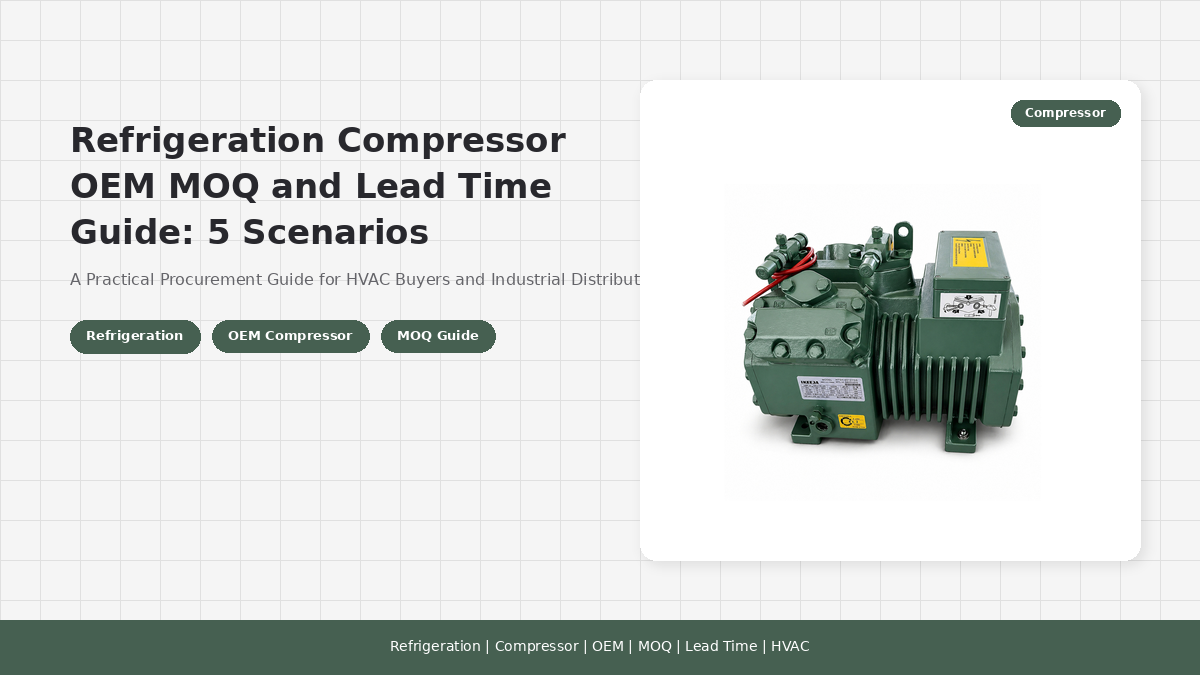
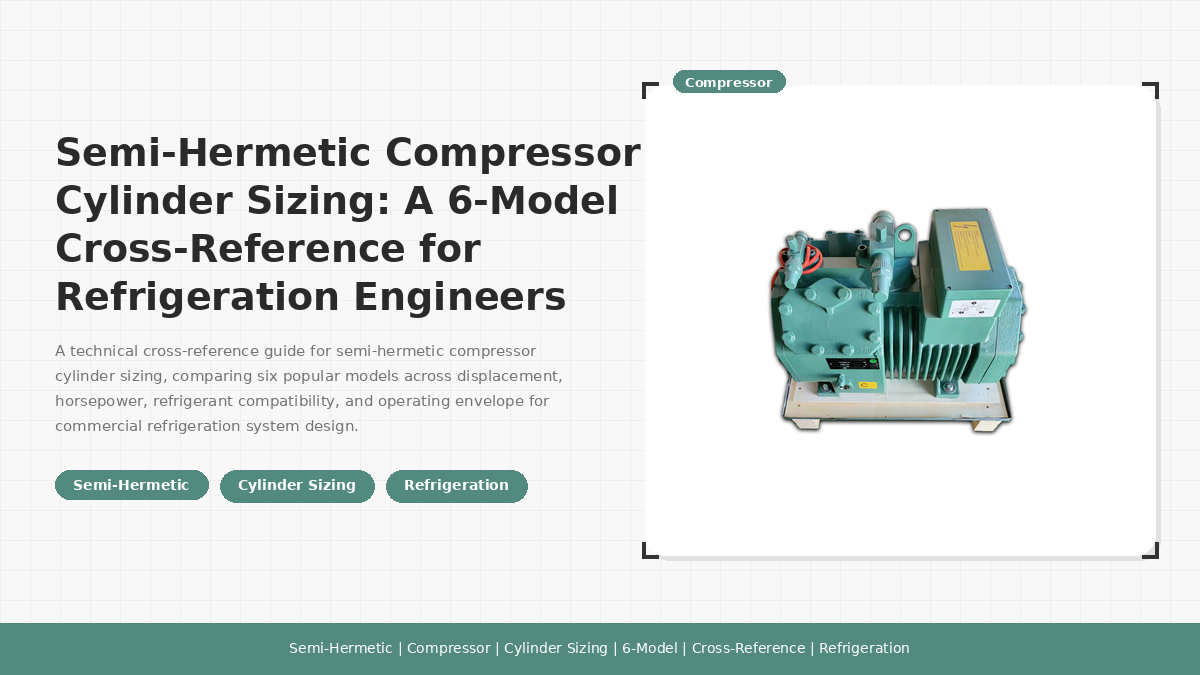
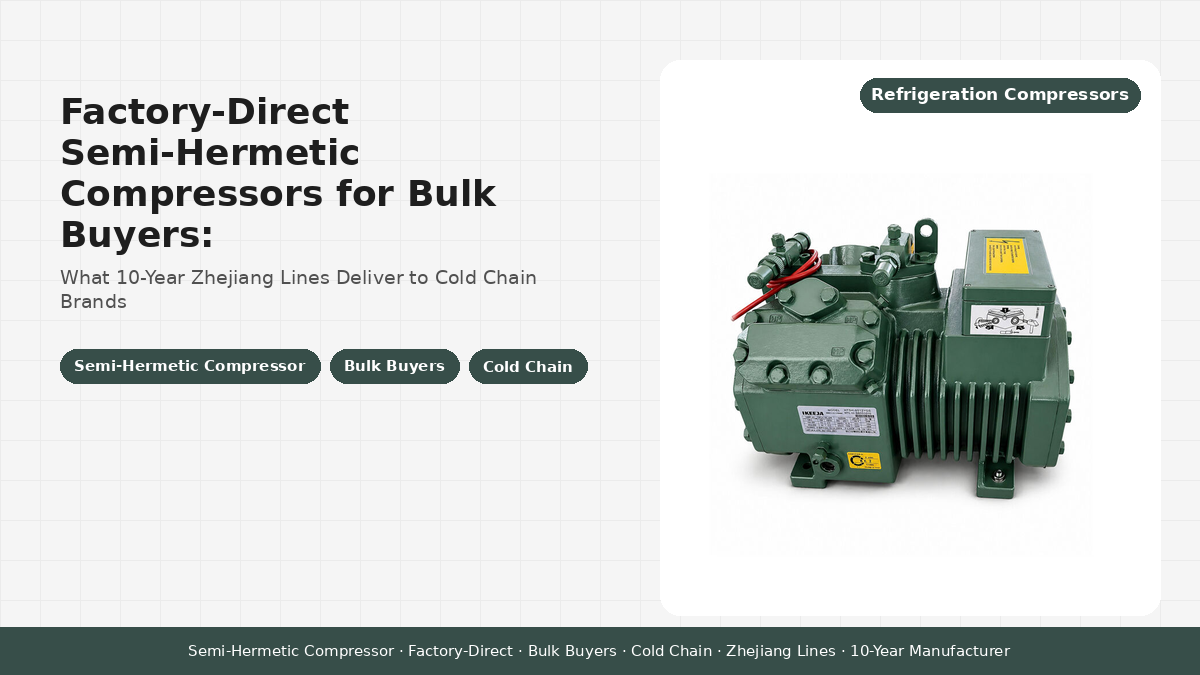
- Compressor supplier. The compressor OEM (for example Bitzer, Copeland, Danfoss, Frascold) that makes the actual compressor — reciprocating, screw, or scroll — that drives the refrigerant cycle. The compressor is the highest-value single component in the condensing unit, often 35 to 50 percent of the unit cost, and it sets the unit's cooling capacity, efficiency, and service interval.
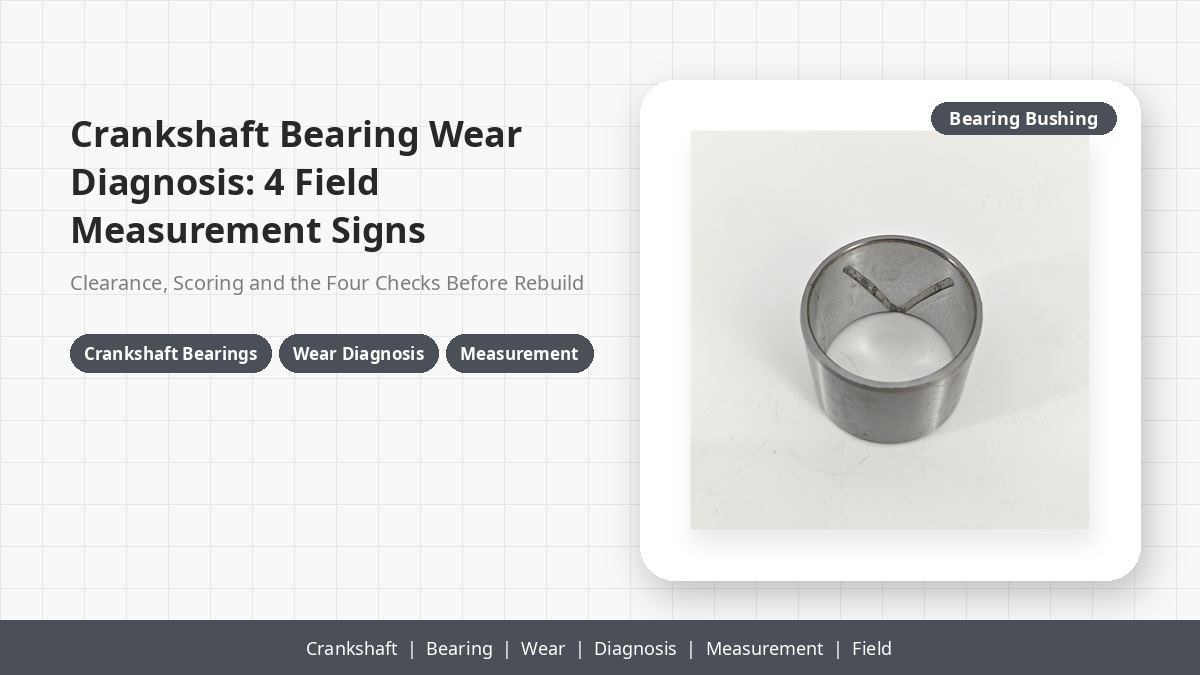
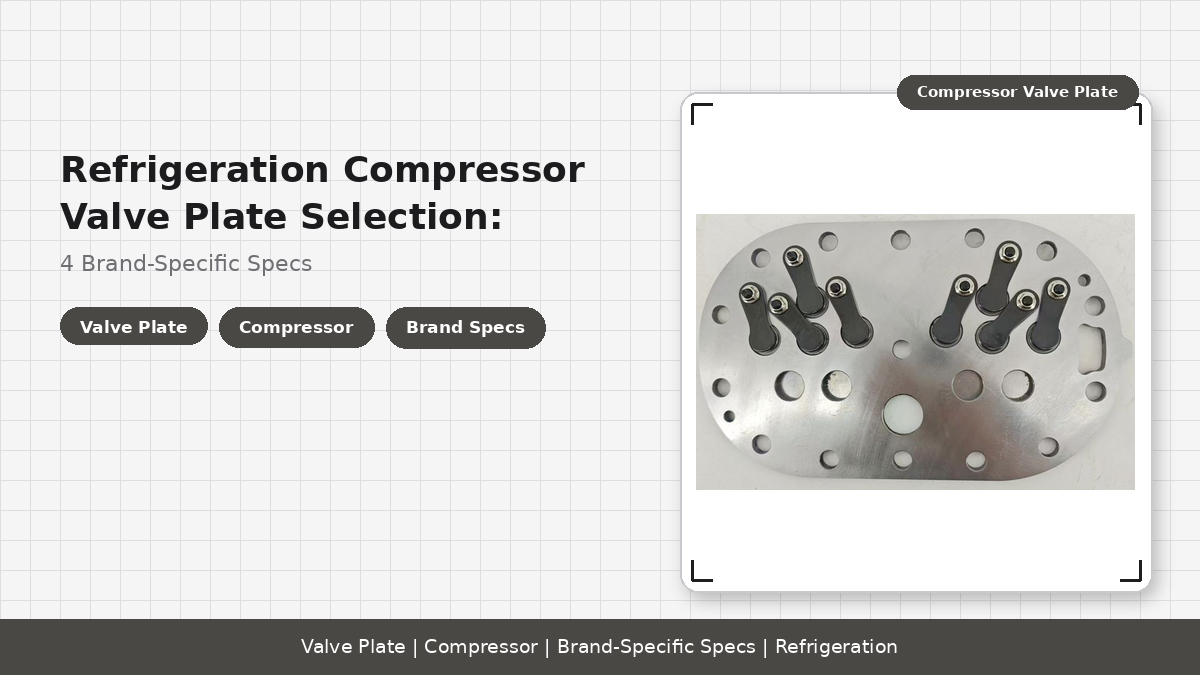
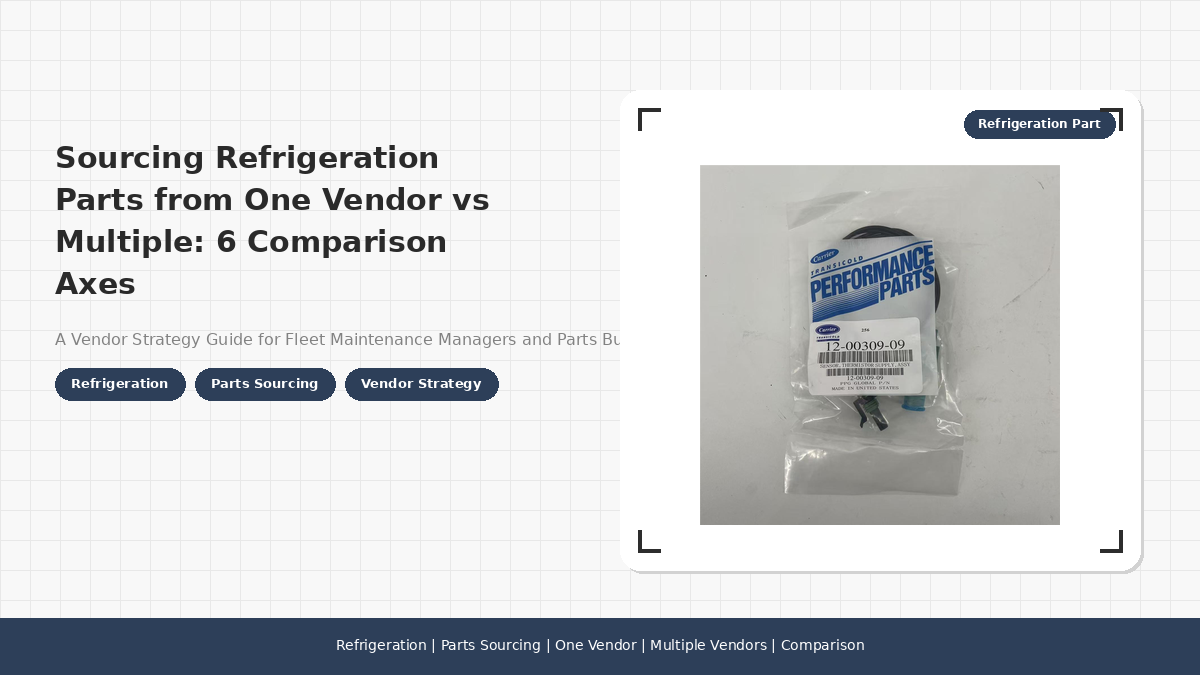
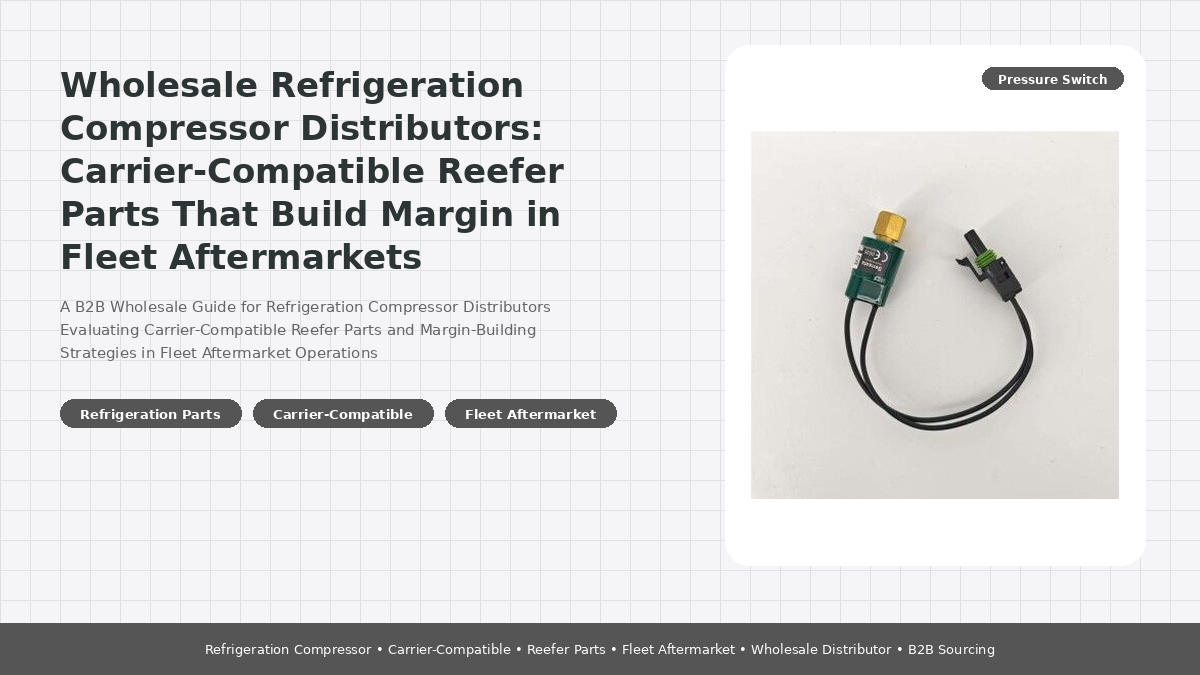
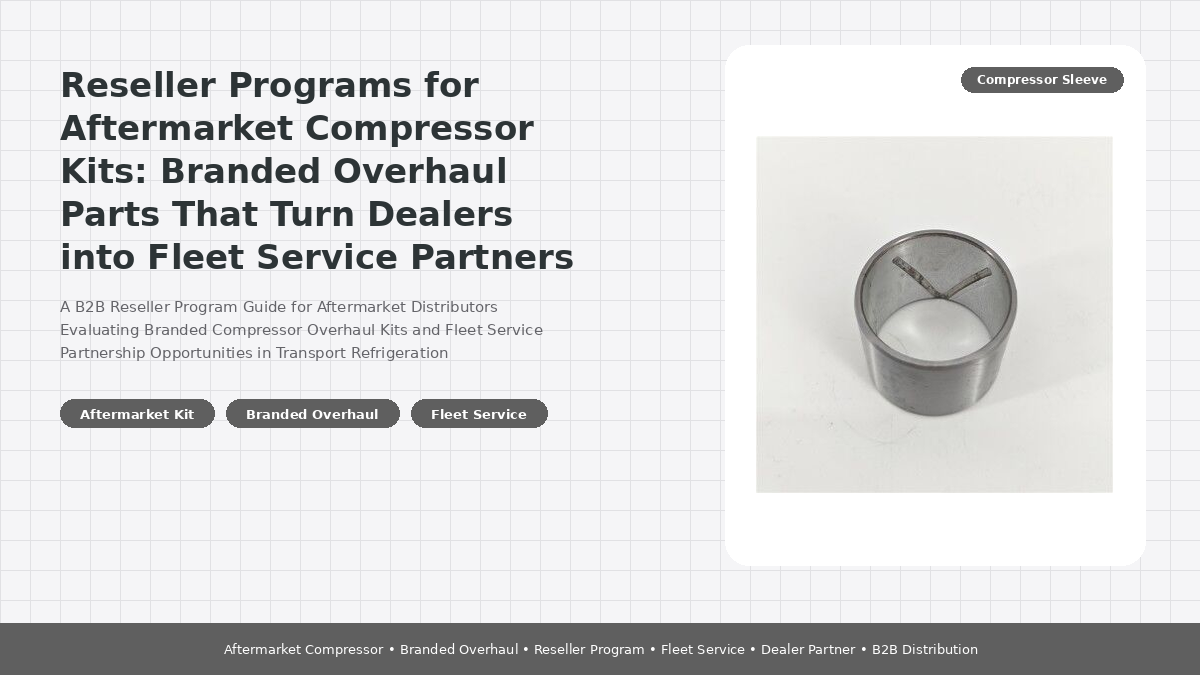
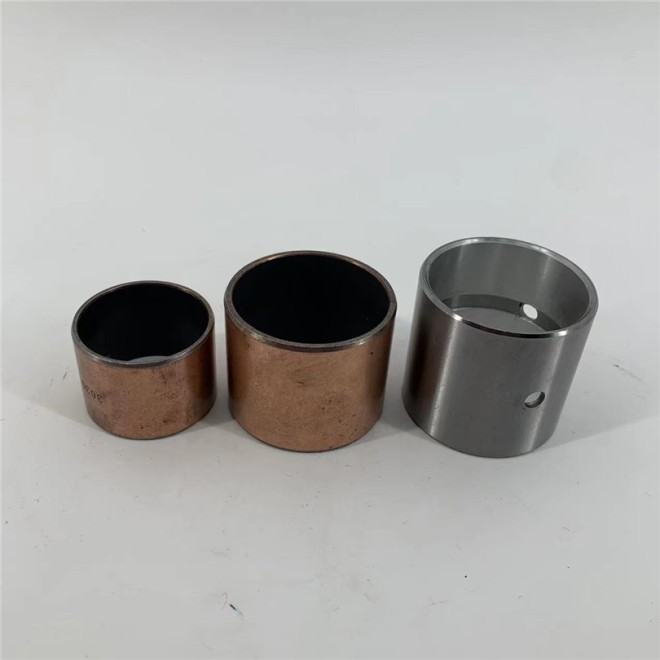
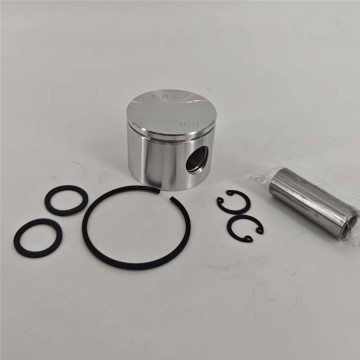
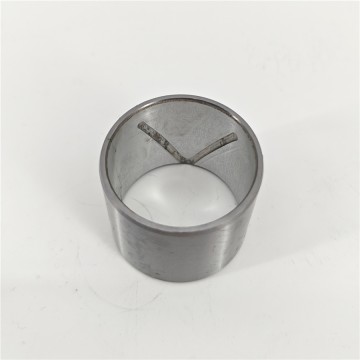
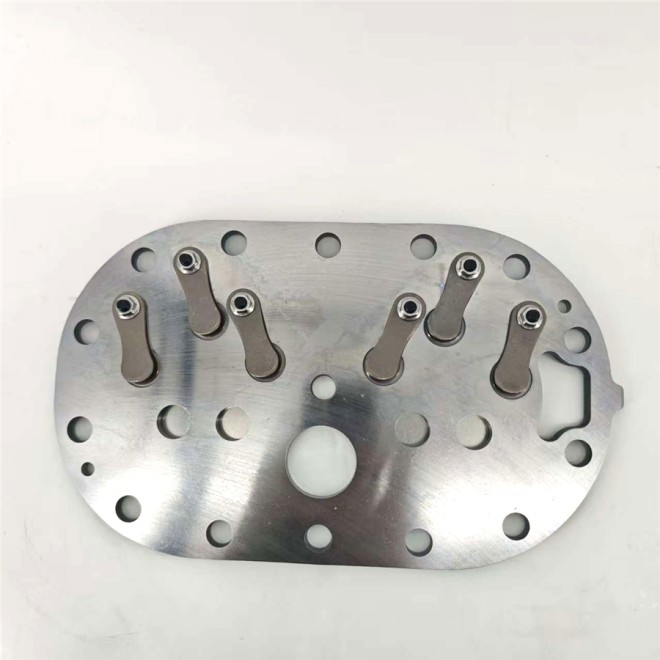
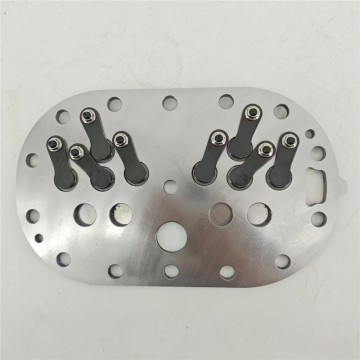
- Spare parts supplier. The distributor or OEM that supplies the wear components for the compressor: valve plates, bearing bushes, piston kits, oil separators, suction/discharge valves, gasket sets, oil filters, and crankcase heaters. These are stocked separately because the compressor OEM does not always run a direct spare-parts channel in every destination market.
- Condensing unit supplier. The fabricator that assembles the compressor into a complete condensing unit: the condenser coil, the receiver, the liquid line drier, the solenoid valves, the pressure controls, the electrical enclosure. Some compressor OEMs run their own condensing unit production (for example, the compressorweien.com condensing unit range covers screw compressor condensing units in water-cooled and air-cooled configurations); others supply the compressor only and leave the condensing unit assembly to independent fabricators.
- Control panel supplier. The panel builder that supplies the electrical control panel: contactors, circuit breakers, phase monitors, oil failure controls, capacity-step controls, and any PLC or BMS integration. The control panel is usually a separate buy because the panel builder certifies to UL 508A or IEC 61439 separately from the condensing unit.
- Installation and commissioning supplier. The local contractor that installs the condensing unit on site, leak-tests the refrigerant circuit, evacuates and charges the system, commissions the control panel, and hands over to the end user. The installation supplier is geographic: a buyer with sites in five countries typically has five installation suppliers, one per country.
The five categories add up to a single functional outcome — a working refrigeration system at the buyer's site — but the procurement team is managing five contracts, five quality audits, five warranty channels, and five logistics windows. That is the surface area that the one-stop vendor model is designed to collapse.
Five Risks of Running a Multi-Vendor Supply Chain
The multi-vendor model has structural risks that the one-vendor model does not. The five risks below are the ones most procurement managers cite when they decide to consolidate.
Risk 1 — Delivery delay cascade
When the compressor supplier delays by two weeks, the condensing unit fabricator cannot start its build, the control panel builder sits on a finished panel waiting for the unit, and the installation contractor has a hole in the schedule. Each delay cascades into the next relationship. In a one-vendor model, the single vendor manages the schedule across all four downstream tasks and absorbs the slip on the buyer's behalf.
Risk 2 — Quality variance between vendors
When each vendor has its own quality system, the buyer ends up auditing five different quality manuals, five inspection plans, and five corrective-action procedures. In practice, the buyer's quality team ends up sampling fewer units per vendor, and quality variance creeps in: a valve plate that passes one batch fails the next because the spare-parts supplier changed its forging supplier. The one-vendor model consolidates the quality system into a single audit.
Risk 3 — Customs friction on multi-origin shipments
When the compressor ships from Germany, the spare parts from Italy, the condensing unit from China, and the control panel from India, the buyer's customs broker manages four declarations per shipment. Each declaration has its own HS code, its own certificate of origin, its own duty rate. A one-vendor shipment from a single country collapses the customs work to one declaration.
Risk 4 — Warranty friction across vendor boundaries
When a compressor fails in the field, the warranty path crosses four vendors: the compressor OEM says the failure was caused by the condensing unit fabricator's poor brazing; the fabricator says the compressor was running outside its envelope; the control panel builder says the panel tripped correctly. The buyer ends up arbitrating a four-way warranty dispute. In a one-vendor model, the single vendor owns the warranty end-to-end and arbitrates the upstream supplier relationships internally.
Risk 5 — Administrative overhead on the procurement team
Each vendor relationship has its own PO cadence, its own invoice format, its own payment terms, its own quarterly business review, its own KPI scorecard, and its own contract renewal cycle. The buyer's procurement team spends more time managing these administrative layers than it spends on supplier selection and category strategy. The one-vendor model consolidates the administrative layers to one set.
What "One-Stop Supply" Actually Means in Refrigeration Compressors
A one-stop supply model covers four procurement categories under a single vendor relationship. The model is not new, but the categories have expanded as buyers have demanded more consolidation.
Category 1 — Compressors
The one-stop vendor supplies the compressor itself, typically in the reciprocating semi-hermetic family (5 to 25 kW) and the screw semi-hermetic family (25 kW and above), with brand options from major OEMs including Bitzer, Copeland, Frascold, and Dorin. The vendor stocks the standard models and sources non-standard models through authorised channels on the buyer's behalf.
Category 2 — Compressor spare parts
The one-stop vendor supplies the full spare-parts catalogue: valve plates, bearing bushes, piston kits, gasket sets, oil separators, suction and discharge valves, oil filters, crankcase heaters, and protection devices (high-pressure switches, low-pressure switches, oil failure controls, discharge temperature sensors). The vendor holds the inventory under a vendor-managed-spares (VMS) agreement, which converts the buyer's stockroom cost into the vendor's working capital.
Category 3 — Condensing units
The one-stop vendor supplies the condensing unit built around the compressor: copper-coil condensers in water-cooled and air-cooled configurations, receivers, liquid line driers, solenoid valves, and the electrical enclosure. The unit ships pre-piped, pre-wired, and pre-charged with refrigerant, ready to mount on the buyer's wall bracket or roof frame.
Category 4 — Technical documentation and certification
The one-stop vendor supplies the technical documentation that goes with each delivery: nameplate artwork, serial-number register, refrigerant charge record, PSAT (pre-shipment acceptance test) report, CE / UL / ETL declaration, and wiring diagram. The documentation is generated once, in the vendor's format, and stays consistent across batches — saving the buyer's engineering team the reconciliation work that comes from five different documentation standards.
The categories above are the standard scope. Some one-stop vendors also offer installation and commissioning support, either through their own service network or through a partner network. This is the fifth category from the multi-vendor model, and including it in the one-stop scope is what makes the model fully consolidated.
The Five-to-One Consolidation: A Step-by-Step Migration Path
Migration from a five-vendor base to a single one-stop vendor is staged across three to six months in six steps. The path is rules-driven and the same for most buyers; what differs is the specific SKU selection at each step.
- Map the current spend. Pull the last twelve months of purchase orders across the five vendor categories and rank the SKUs by total spend. The top 20 percent of SKUs by spend usually account for 80 percent of the total spend; these are the migration anchors.
- Issue a single-vendor RFQ. Identify two or three candidate vendors that already supply some of the categories in the buyer's list. Issue a request-for-quotation that covers the top 20 percent of SKUs by spend across all five categories.
- Run a parallel-supply pilot. Pick one SKU at the top of the spend list and ask the candidate one-stop vendor to supply it for one quarter, in parallel with the existing five-vendor supply chain. Compare quality, delivery, and total cost against the existing baseline.
- Validate quality and delivery. Run the candidate vendor through the buyer's incoming-quality process on the pilot SKU. Inspect at least one batch on-site at the vendor's facility if practical. Confirm the vendor can hit the buyer's delivery cadence.
- Migrate the remaining SKUs in waves. Move the remaining top-spend SKUs over to the one-stop vendor in waves of two to three per quarter, starting with the lower-criticality items. Keep the legacy vendors on standby for the first wave in case the migration slips.
- Decommission legacy vendors. At the end of each wave, formally close the PO relationship with the legacy vendors in that category. Confirm that all open warranty claims have been settled and that the vendor-managed-spares inventory has been returned or transferred.
Most buyers complete the migration in four to six months. Buyers that try to migrate all five categories simultaneously usually overrun their timeline because the parallel-supply pilot cannot be run on every SKU at once; the wave approach lets the buyer catch issues on the first wave before they propagate to the second and third.
Reciprocating vs Screw vs Semi-Hermetic: What Your One Vendor Should Stock
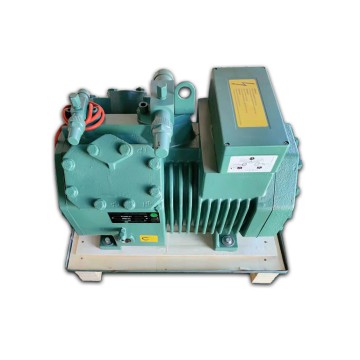
A mature one-stop vendor stocks three compressor families and the matching spare-parts catalogue for each. The buyer should expect to see all three on the vendor's stocking list before signing the consolidation contract.
| Family | Capacity range | Typical application | MPR / efficiency note | Spare-parts catalogue depth |
|---|---|---|---|---|
| Hermetic reciprocating | Under 5 kW | Small-format cold rooms, reach-in refrigeration | Lower efficiency, lower cost; service by replacement rather than repair | Limited; hermetic compressors are typically replaced, not rebuilt |
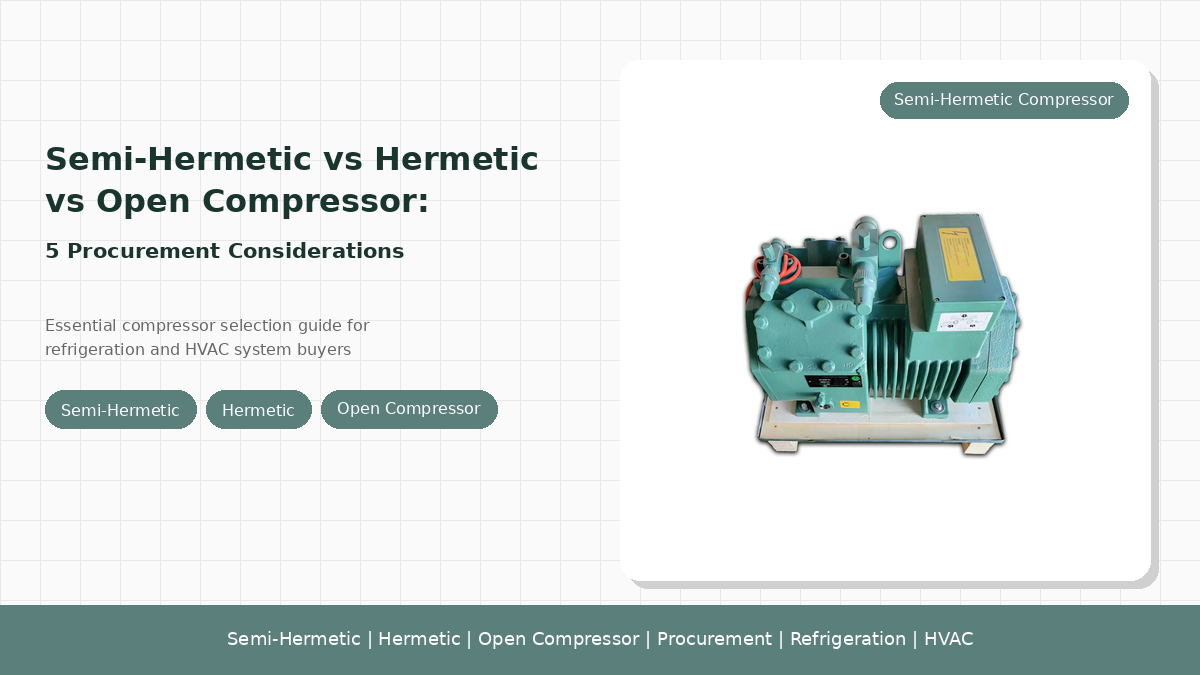
| Semi-hermetic reciprocating | 5 - 25 kW | Medium-temp and low-temp cold rooms, process cooling, food processing | Workhorse of industrial refrigeration; medium efficiency; serviceable | Deep; valve plates, bearing bushes, piston kits, gaskets, oil separators |
| Semi-hermetic screw | 25 kW and above | Large cold rooms, blast freezing, process cooling at scale | Highest efficiency at full load; capacity-step control for part load | Specialised; rotor profiles, slide valves, bearing replacements |
For a deeper dive on the reciprocating vs screw decision in the semi-hermetic family specifically, the compressorweien.com reciprocating vs screw comparison walks through the duty-cycle, efficiency, and service-infrastructure differences between the two designs. The short version: reciprocating dominates the 5 to 25 kW medium-temp range where most industrial buyers operate; screw dominates the 25 kW and above range where capacity-step control delivers real part-load efficiency. A mature one-stop vendor carries both and helps the buyer select between them by duty cycle.
Six Cost Levers That Appear Once You Consolidate
The 8 to 18 percent savings from consolidating five vendors to one come from six cost levers. Each lever is independent, and the savings compound as more levers come into play.
| # | Cost lever | Typical saving | How the lever works |
|---|---|---|---|
| 1 | Unit-price volume discount on the compressor | 3 - 7 percent | Larger single-vendor volume unlocks a tier discount the five-vendor split did not |
| 2 | Consolidated freight on the condensing unit and spare parts | 1 - 3 percent | Single shipment from one origin replaces four shipments from four origins |
| 3 | Single-source warranty administration | 1 - 2 percent | One warranty contact replaces five; less buyer time spent arbitrating disputes |
| 4 | Vendor-managed spares (VMS) inventory | 1 - 3 percent | Vendor carries the spare-parts inventory; buyer's stockroom cost converts to vendor working capital |
| 5 | Reduced engineering time on documentation reconciliation | 0.5 - 1.5 percent | One documentation standard replaces five; less buyer engineering time per delivery |
| 6 | Reduced supplier-management overhead on the procurement team | 0.5 - 1 percent | One quarterly business review replaces five; less buyer procurement-team time per quarter |
The first two levers (volume discount and consolidated freight) are the largest and the most defensible in a CFO conversation. The remaining four are smaller but compound over time: the buyer's procurement team gets back roughly 10 percent of its category-management time, which is then redeployed to category strategy rather than supplier administration. Over a three-year horizon, the total savings typically run 12 to 22 percent, ahead of the 8 to 18 percent first-year figure.
When NOT to Consolidate: The Three Cases Where 5 Vendors Beats 1
Consolidation is the right call for most procurement profiles, but not all. The three cases below are the ones where the five-vendor model still beats the one-vendor model in 2026.
Case 1 — Best-in-class performance is critical
If the buyer's duty cycle demands the highest-efficiency screw compressor on the market for a process-cooling application, and the one-stop vendor's compressor offering does not include that specific OEM model, the buyer is better off running a two-vendor model: the best-in-class screw compressor supplier for that SKU, and the one-stop vendor for the other four categories. Trying to force-fit a different compressor into the one-vendor relationship trades efficiency for administrative simplicity, and the efficiency loss usually exceeds the administrative saving.
Case 2 — Multiple regulatory regimes
If the buyer ships condensing units to destinations with different certification requirements (CE for EU plus UL for North America plus KC for South Korea plus CCC for China), and the one-stop vendor cannot supply all four certification scopes, the buyer is better off keeping a regional condensing unit supplier for the certification scope the one-stop vendor cannot cover. Trying to force-fit all destinations through one certification capability forces the buyer into the lowest-common-denominator certification, which fails in at least one destination.
Case 3 — Small annual spend per category
If the buyer's annual spend on any single category is below USD 100,000, the overhead of supplier management is small enough that five vendors can run on a part-time buyer. The one-vendor model in this case concentrates too much spend with a single supplier, which exposes the buyer to a single-supplier failure risk that the five-vendor model does not carry. The general rule of thumb: when annual spend per category is below USD 100,000, the consolidation savings do not justify the single-source concentration risk.
Outside these three cases, the one-vendor model is the right call. The savings are real, the migration path is well-understood, and the supply-chain resilience argument has only gotten stronger since 2020. For a project-specific conversation about whether the one-stop model fits a buyer's procurement profile, contact the Compressor Weien engineering team with the last twelve months of spend data in hand.
Send your last twelve months of refrigeration compressor spend across the five supplier categories. The Compressor Weien engineering team replies within one business day with a side-by-side comparison of one-stop vs current five-vendor total cost.
Frequently Asked Questions
What does one vendor, one stop supply actually mean for a refrigeration compressor buyer?
One vendor, one stop supply means a single source supplies every refrigeration component in the procurement list: the reciprocating or screw compressor itself, the spare parts (valve plates, bearing bushes, piston kits, gasket sets), the condensing unit built around the compressor, and the technical documentation that goes with each delivery. The buyer issues one purchase order instead of five, receives one consolidated shipment, and has one warranty contact instead of five. The model is not new in industrial procurement, but it has become the default for refrigeration buyers in 2026 as multi-vendor overhead has grown faster than the savings from specialisation.
What five suppliers are most procurement teams working with today?
The five suppliers most procurement teams work with today are: (1) the compressor supplier (the brand or OEM that makes the compressor itself, for example Bitzer, Copeland, Danfoss, Frascold), (2) the spare parts supplier (a distributor or OEM that supplies valve plates, bearing bushes, piston kits, oil separators and similar wear components), (3) the condensing unit supplier (a fabricator that assembles the compressor into a condensing unit with a condenser coil, receiver, valves and controls), (4) the control panel supplier (a panel builder that supplies the electrical control panel, contactors, circuit breakers, and PLC), and (5) the installation and commissioning service supplier (a local contractor that installs, leak-tests, evacuates and charges the system on site).
What is the typical cost saving from consolidating five suppliers into one?
The typical cost saving from consolidating five suppliers into one ranges from 8 to 18 percent of total procurement value for refrigeration compressor packages in 2026. The savings come from six cost levers: unit-price volume discount on the compressor, consolidated freight on the condensing unit and spare parts, single-source warranty administration, reduced inventory carrying cost through vendor-managed spares, reduced engineering time on documentation reconciliation, and reduced supplier-management overhead on the buyer's procurement team. The savings are largest when the buyer's annual spend on the five suppliers exceeds USD 500,000.
How do you migrate from a five-vendor base to a single vendor without production downtime?
Migration is typically staged across three to six months in six steps. (1) Map the current spend across the five suppliers and identify the highest-volume SKU as the migration anchor. (2) Issue a single-vendor RFQ to two or three candidate vendors that already supply some of the categories. (3) Run a parallel-supply pilot for one SKU across the old vendor base and the candidate single vendor for one quarter. (4) Validate quality and delivery against the existing baseline. (5) Migrate the remaining SKUs in waves of two to three per quarter, starting with the lower-criticality items. (6) Decommission the legacy vendor relationships at the end of each wave.
How does a one-vendor strategy handle warranty claims across different compressor models?
A mature one-stop vendor handles warranty claims through a single channel regardless of the compressor model inside the condensing unit. The vendor carries the relationship with the compressor OEM (Bitzer, Copeland, or another), files the warranty claim on the buyer's behalf, manages the spare-parts replacement, and ships the replacement to the buyer's site. The buyer's exposure is to one vendor's warranty terms and one warranty contact, not five. The trade-off is that the buyer's leverage on individual compressor-OEM warranty disputes is reduced, since the one-stop vendor negotiates with the compressor OEM on the buyer's behalf.
Why do procurement managers consolidate their compressor supplier base in 2026?
Procurement managers consolidate their compressor supplier base in 2026 for four reasons. First, the multi-vendor overhead has grown: each vendor relationship has its own PO process, its own quality audit, its own warranty channel, and its own logistics window. Second, the savings from specialisation have shrunk: the compressor OEMs and condensing-unit fabricators have converged on a similar quality and price band, so the differentiation is no longer worth five-vendor complexity. Third, supply-chain disruptions since 2020 have made single-source resilience more valuable than multi-vendor diversification. Fourth, digital procurement platforms make single-vendor consolidation easier to manage than they did a decade ago.
Which compressor type is most often stocked by a one-stop vendor for industrial buyers?
The compressor type most often stocked by a one-stop vendor for industrial buyers is the semi-hermetic reciprocating compressor, typically in the 5 to 25 kW medium-temperature range and the 3 to 15 kW low-temperature range. This is the workhorse of industrial refrigeration: it covers the majority of cold-room and process-cooling applications, it has the deepest global service infrastructure, and it is available in OEM-spec models from multiple compressor brands. Screw compressors dominate above 25 kW; hermetic reciprocating compressors dominate below 5 kW. A mature one-stop vendor carries all three families plus the matching spare-parts catalogue.
Is consolidating to one vendor always cheaper than running a five-vendor base?
No. Consolidating to one vendor is cheaper in most cases, but not in all. The model backfires in three scenarios: (1) when the buyer needs best-in-class performance on a critical parameter (for example, the highest-efficiency screw compressor for a process-cooling duty), and the one-stop vendor's compressor offering does not include that specific OEM model; (2) when the buyer's destinations span multiple regulatory regimes (CE for EU plus UL for North America plus KC for South Korea), and the one-stop vendor cannot supply the certification scope for all of them; (3) when the buyer's annual spend on any single category is below USD 100,000, where the overhead of supplier management is small enough that five vendors can run on a part-time buyer. In these three cases the five-vendor model beats the one-vendor model.
About the Author
References and Industry Resources
The following resources were used to support the supplier-consolidation analysis in this article. They are industry-association and procurement-research references, not the underlying ISO/AHRI/ASHRAE standards themselves. For exact standard text, refer to the regulatory authority directly.
- American Society of Heating, Refrigerating and Air-Conditioning Engineers: ASHRAE
- European HVAC certification and rating programme: Eurovent Certification
- US Environmental Protection Agency energy-efficiency programme: ENERGY STAR
- Global HVAC manufacturer (industrial and commercial refrigeration): Carrier
- Global HVAC manufacturer (industrial and commercial air conditioning): Daikin