
A six-axis decision matrix for fleet operators, OEM distributors, and reefer container aftermarket buyers weighing single-vendor vs multi-vendor sourcing of transport refrigeration parts — covering part number coverage, lead time, quality, pricing, after-sales, and total procurement cycle cost.
TL;DR — Six Axes Decide One-Vendor vs Multiple for Transport Refrigeration Parts. The single-vendor vs multi-vendor decision for transport refrigeration parts is not a single-axis decision; it is a six-axis decision where each axis exposes a different trade-off between the depth that a single specialist vendor can offer and the breadth that multiple specialist vendors can cover. The six axes are: part number coverage and cross-brand compatibility, lead time and MOQ, quality control and reverse-engineering risk, pricing transparency and volume discount, after-sales support and RMA workflow, and total procurement cycle cost. The right balance depends on the fleet size, the brand mix in the fleet (Carrier Transicold, Thermo King, Starcool, and so on), and the volume split across part categories. The matrix below is the working tool to map these six axes against the buyer's specific brand-mix and volume profile.
Why "6 Axes" Is the Working Frame for Transport Refrigeration Parts Sourcing
For most of the past decade, the conversation about refrigeration parts sourcing has been a conversation about price. The buyer prepared an RFQ that listed the part numbers, the factory quoted against the list, and the lowest-quote factory won the order. The price conversation worked in a market where the buyer was purchasing a single part category for a single brand, and where the downstream cost of a supplier failure was a routine warranty claim that the supplier absorbed.
The market for 2026 is not that market. The buyer is increasingly a multi-brand fleet operator, an OEM distributor, or a reefer container aftermarket buyer, and the buying decision is driven by six axes that the price-only RFQ does not capture. The price-only RFQ loses to a six-axis RFQ because the six-axis RFQ surfaces the downstream cost of a supplier failure — the warranty-claim workflow, the procurement-cycle overhead, the freight-forwarder coordination cost — that the price-only RFQ hides. The buyer that runs the six-axis RFQ before signing the PO is the buyer that catches the downstream cost in the negotiation rather than after the launch.
Three forces are driving the shift to the six-axis frame. The first is the maturation of the multi-brand fleet — the typical European or North American reefer fleet in 2026 runs a mix of Carrier Transicold, Thermo King, and Starcool units rather than a single brand, and the multi-brand mix forces the procurement team to qualify suppliers across multiple part-number families that do not cross-reference cleanly. The second is the maturation of the aftermarket — the Carrier Transicold Thinline, RRS, and RTS series each carry distinct 12- prefix part numbers, the Thermo King SLXi and Precedent series carry distinct 41- prefix part numbers, and the Starcool CIM5 and CIM6 series carry distinct 81- prefix part numbers, and the aftermarket catalog is fragmenting along these prefix families. The third is the maturation of the supplier base — a one-stop supplier that covers all three prefix families can offer a procurement cycle that a specialist supplier cannot match, but the one-stop supplier cannot match the depth that a specialist supplier offers on a single prefix family, and the trade-off between breadth and depth is the trade-off that the six-axis frame exposes.
The reference supplier for this guide is the Weien transport refrigeration parts catalog, which lists Carrier Transicold, Thermo King, and Starcool compatible parts side-by-side, and which is part of the broader Weien products page that covers semi-hermetic reciprocating compressors, semi-hermetic screw compressors, scroll compressors, cold room panels, condensing units, evaporators, and refrigerants. To contact Weien about how the six-axis comparison applies to your specific brand-mix and volume profile, the Weien export team can run the matrix below against your target fleet, your target brand mix, and your target part-category split.
The Six Comparison Axes — Side-by-Side View
The matrix is the working table for the procurement team mapping a refrigeration parts sourcing decision to the 2026 brand-mix and volume profile of the fleet. Rows are the six comparison axes covered in this guide. Columns are the two sourcing models being compared (single-vendor vs multi-vendor) plus the dominant factor that decides which model wins on each axis. Each cell is the dominant behavior observed across the transport refrigeration parts aftermarket for 2026, and the right-most column is the dominant decision that the axis forces.
| Axis | Single-Vendor Behavior | Multi-Vendor Behavior | Deciding Factor |
|---|---|---|---|
| Axis 1 — Part Number Coverage & Cross-Brand Compatibility | One catalog covers Carrier Transicold (12- prefix), Thermo King (41- prefix), Starcool (81- prefix), plus Bitzer / Carrier / Copeland reciprocating compressor parts | Specialist catalog covers a single prefix family in depth (e.g., Thermo King SLXi parts only) | Fleet brand-mix and the volume per brand that clears the specialist MOQ |
| Axis 2 — Lead Time, MOQ, and Order Consolidation | One consolidated shipment per procurement cycle, single freight-forwarder booking, one customs clearance | Multiple shipments per cycle, multiple freight bookings, multiple customs clearances | Volume split across categories and the freight-forwarder coordination overhead |
| Axis 3 — Quality Control and Reverse-Engineering Risk | One quality-control protocol applied across the consolidated catalog | Specialist QC on the deep-served prefix family, generic QC on the rest | Whether the deep-served brand carries a quality risk that the consolidated catalog does not cover |
| Axis 4 — Pricing Transparency and Volume Discount | Volume discount applied across the consolidated basket, single quote round-trip | Specialist pricing on the deep-served prefix family, separate quotes per brand | Whether the consolidated basket volume clears the volume-discount threshold |
| Axis 5 — After-Sales Support and RMA Workflow | One RMA contact, one warranty contract, one defect-investigation workflow | Specialist RMA on the deep-served brand, parallel RMA workflows on the rest | The RMA workflow difference that surfaces only after a warranty claim |
| Axis 6 — Total Procurement Cycle Cost | Lower per-cycle overhead, higher per-part unit cost in some categories | Higher per-cycle overhead, lower per-part unit cost in the deep-served categories | The breakeven volume per category above which specialist sourcing wins |
The matrix collapses to a single rule for most multi-brand fleet operators: the consolidated basket wins on overhead until the deep-served brand's volume clears the specialist MOQ threshold. The procurement team that runs this matrix before issuing the RFQ is the procurement team that catches the breakeven volume before signing the PO. The procurement team that runs a price-only RFQ is the procurement team that signs the consolidated PO and discovers the breakeven volume twelve months later.
30-Second Procurement Snapshot. Fleet running fewer than ten reefer units across two or three brands with no dominant brand by volume — the single-vendor consolidated basket wins on Axis 2 lead time, Axis 4 quote round-trip, and Axis 6 total cycle cost. Fleet running more than fifty units with one brand dominant by volume — the multi-vendor specialist plus a backup general supplier wins on Axis 1 coverage depth, Axis 3 quality on the dominant brand, and Axis 5 RMA workflow on the dominant brand. To contact Weien about a single-vendor consolidated basket for a fleet profile that fits the first scenario, send your brand-mix, your volume per brand, and your current RMA workflow, and the Weien export team will run the six-axis matrix against your profile.
Axis 1 — Part Number Coverage & Cross-Brand Compatibility
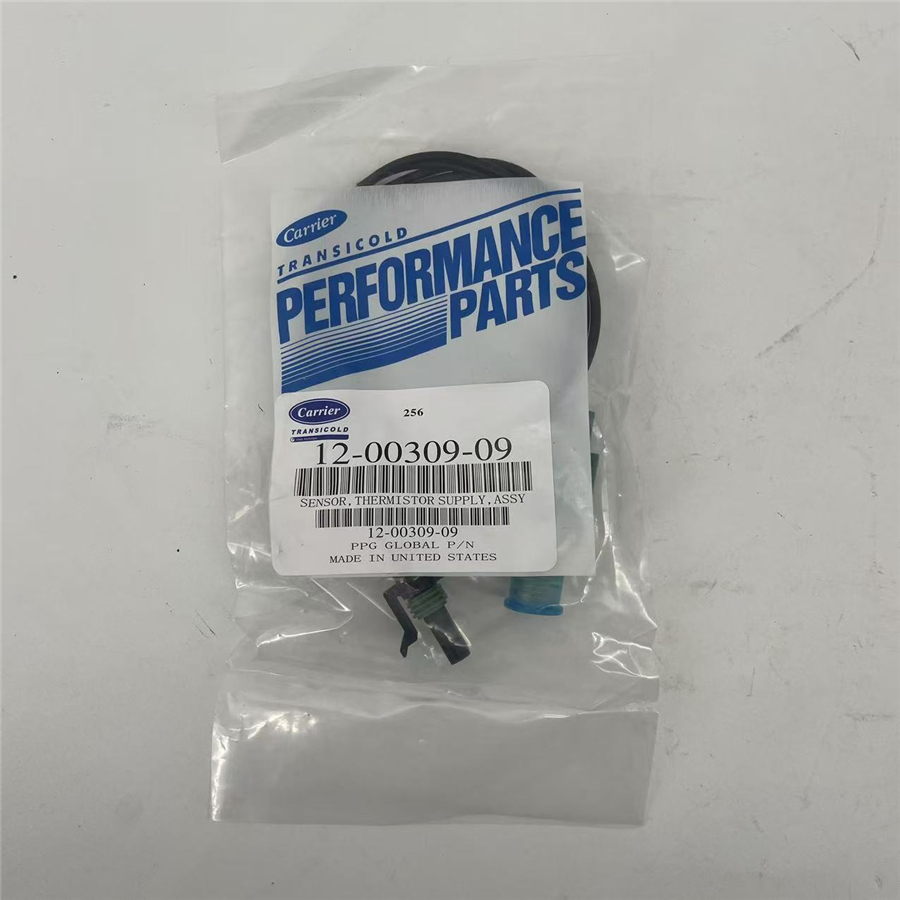
The first axis is part number coverage and cross-brand compatibility. A fleet operator running a mix of Carrier Transicold, Thermo King, and Starcool units needs a catalog that covers the distinct part-number families that each brand carries, and the catalog coverage drives whether the single-vendor or the multi-vendor model can serve the fleet at all. Carrier Transicold parts typically carry 12- prefix numbers for Thinline, RRS, and RTS reefer container series — including the 12-00309-06 thermistor supply sensor, the 12-00309-08 pressure switch, the 12-00395-01SV thermistor supply sensor, and the 24-00006-20 defrost heater. Thermo King parts typically carry 41- prefix numbers for Precedent and SLXi series — including the 41-4004 high pressure switch, the 41-8548 temperature sensor, and the 41-8723 keypad assembly — plus 104- prefix numbers for evaporator fan motors and 14- prefix numbers for discharge valves. Starcool parts typically carry 81- prefix numbers for CIM5 and CIM6 controllers — including the 818940A temperature sensor, the 818515A VGA display PCB, the 818553A solenoid coil, and the 818828A power plug — plus 819501A for high-pressure switches on SC-MCI40, SCU, and SCI refrigeration units. A a one-stop supplier that lists all three prefix families is the procurement-side answer to the brand-mix fragmentation, and the multi-brand fleet that sources from a single-vendor catalog can avoid the qualification overhead that a multi-vendor specialist catalog imposes.
The dominant advantage of the single-vendor model on Axis 1 is the consolidated catalog. A buyer that sources from a one-stop supplier that lists Carrier Transicold, Thermo King, and Starcool compatible parts side-by-side can issue a single RFQ, can run a single quote round-trip, and can manage a single quality file. A buyer that sources from multiple specialists must qualify each specialist, must maintain a part-number cross-reference for the long-tail categories that the specialist does not cover, and must reconcile the multiple catalogs into a single procurement workflow.
The dominant advantage of the multi-vendor model on Axis 1 is the deep-served prefix family. A Thermo King specialist that stocks the 41- prefix and the 14- prefix in depth can offer faster lead times on the deep-served parts than a one-stop supplier that stocks a thin assortment of the same prefixes. A fleet running 50+ Thermo King units typically benefits from qualifying a Thermo King specialist alongside a general supplier, and the specialist RMA workflow is faster on the deep-served prefix family than the consolidated RMA workflow is.
The dominant limitation of the single-vendor model on Axis 1 is the long-tail parts that the consolidated catalog stocks thinly. A one-stop supplier that lists 100 Carrier Transicold 12- prefix parts, 100 Thermo King 41- prefix parts, and 100 Starcool 81- prefix parts typically stocks fewer units per part than a specialist that lists 800 of one prefix family, and the lead time on the thinly-stocked part is longer than the lead time on the well-stocked part. The fleet that runs the consolidated basket encounters the long-tail lead-time penalty at the worst possible moment — typically when a reefer unit is down and the part is needed in hours rather than days.
Axis 2 — Lead Time, MOQ, and Order Consolidation Logistics
The second axis is lead time, MOQ, and order consolidation logistics. Lead time measures the elapsed time from PO placement to part delivery; MOQ measures the minimum order quantity per part; and order consolidation logistics measures whether the buyer receives one consolidated shipment per procurement cycle or multiple shipments. The three sub-axes drive whether the consolidated basket is logistically viable, and whether the consolidated basket saves more on freight-forwarder coordination than it loses on specialist lead time.
The dominant advantage of the single-vendor model on Axis 2 is the consolidated shipment. A buyer that sources Carrier Transicold, Thermo King, and Starcool parts from a one-stop supplier receives one consolidated shipment per procurement cycle, books one freight-forwarder slot, runs one customs clearance, and pays one freight invoice. A buyer that sources from three specialists receives three shipments, books three freight-forwarder slots, runs three customs clearances, and pays three freight invoices — and the freight-forwarder coordination overhead alone can absorb the procurement cost savings from the specialist pricing.
The dominant advantage of the multi-vendor model on Axis 2 is the per-part speed on the deep-served prefix family. A Thermo King specialist that stocks 800 SKUs of the 41- prefix can ship a single 41-8548 temperature sensor same-day or next-day from local inventory, while a one-stop supplier that stocks 100 of the 41- prefix ships the same part in three to seven days because the part is in production rather than on the shelf. The fleet that runs 50+ Thermo King units typically values the same-day specialist lead time more than the consolidated shipment lead time, because the down-cost of a Thermo King unit waiting for a 41-8548 sensor far exceeds the freight-forwarder coordination overhead saved by the consolidated basket.
The dominant limitation of the single-vendor model on Axis 2 is the MOQ on the long-tail parts. A one-stop supplier that carries a thin assortment per prefix family often sets a higher MOQ per part to amortize the stocking cost, and the fleet that runs the consolidated basket ends up carrying inventory of long-tail parts that the fleet does not need at the moment of purchase. The inventory-carry cost is real, and it is the cost that the consolidated basket imposes on the buyer.
Axis 3 — Quality Control, Testing, and Reverse-Engineering Risk
The third axis is quality control, testing, and reverse-engineering risk. Quality control measures whether the supplier runs a documented QC protocol on every shipment; testing measures whether the supplier tests each part type against a published specification; and reverse-engineering risk measures whether the aftermarket part meets the OEM specification closely enough to avoid a warranty claim or a downstream equipment failure. The three sub-axes drive whether the consolidated catalog carries a hidden quality risk that the multi-vendor specialist avoids.
The dominant advantage of the single-vendor model on Axis 3 is the consistent quality protocol. A one-stop supplier that runs the same incoming-materials inspection, the same in-process QC, and the same pre-shipment testing across Carrier Transicold, Thermo King, and Starcool compatible parts gives the buyer a single quality file to manage. The buyer that runs the consolidated basket has one QC audit per year, one factory-visit report, and one corrective-action workflow, and the QC overhead is significantly lower than the overhead of managing three separate QC files at three specialists. For the testing protocol that defines the operating envelope, the ASHRAE cold-chain and refrigeration-handling standards are the engineering reference most transport fleets align to.
The dominant advantage of the multi-vendor model on Axis 3 is the deep-served prefix family specialist testing. A Thermo King specialist that stocks 800 of the 41- prefix has likely reverse-engineered each part against the OEM specification, has tested each part in a Thermo King application, and has built a corrective-action history on each part that the one-stop supplier does not have. The specialist reverse-engineering depth is the dominant quality advantage on the deep-served prefix family, and the quality advantage is most visible when the part is a high-precision part such as a 41-8723 keypad assembly or a 41-8548 temperature sensor.
The dominant limitation of the single-vendor model on Axis 3 is the reverse-engineering depth on the long-tail parts. A one-stop supplier that carries a thin assortment per prefix family often relies on catalog specifications rather than on reverse-engineering depth, and the aftermarket part meets the OEM specification at the catalog level but not at the application level. The fleet that runs the consolidated basket encounters the reverse-engineering gap when the long-tail part fails in an application where the OEM specification and the application specification diverge, and the failure mode is the kind that surfaces only after weeks of operation.
Axis 4 — Pricing Transparency, Volume Discount, and Quote Negotiation Overhead
The fourth axis is pricing transparency, volume discount, and quote negotiation overhead. Pricing transparency measures whether the supplier discloses the unit cost, the freight cost, and the duty cost separately; volume discount measures whether the buyer receives a meaningful discount at consolidated volume; and quote negotiation overhead measures the procurement-cycle hours spent on RFQ, on quote round-trip, and on PO negotiation. The three sub-axes drive whether the consolidated basket saves more on per-part unit cost than it loses on quote negotiation overhead.
The dominant advantage of the single-vendor model on Axis 4 is the consolidated volume discount. A one-stop supplier that quotes a consolidated basket of 100 Carrier Transicold 12- prefix parts, 100 Thermo King 41- prefix parts, and 100 Starcool 81- prefix parts can apply a meaningful volume discount that a specialist that quotes a single 100-piece 41- prefix basket cannot match. The volume discount is the procurement-side argument for the consolidated basket on Axis 4, and the argument is strongest when the buyer can commit a long-term procurement contract that locks the volume discount for a defined cycle.
The dominant advantage of the multi-vendor model on Axis 4 is the specialist unit pricing on the deep-served prefix family. A Thermo King specialist that stocks 800 of the 41- prefix and competes on price with other Thermo King specialists can offer a per-part unit cost that a one-stop supplier that stocks 100 of the 41- prefix cannot match. The specialist unit pricing is the procurement-side argument for the multi-vendor model on Axis 4, and the argument is strongest when the buyer can switch between specialists on a per-cycle basis to drive the specialist pricing down.
The dominant limitation of the single-vendor model on Axis 4 is the quote negotiation overhead when the consolidated basket includes specialty parts. A one-stop supplier that quotes a consolidated basket of commodity parts plus specialty parts often prices the specialty parts above the specialist price, and the buyer that runs the consolidated basket must either accept the specialty-part premium or split the specialty parts to a specialist — and either option defeats the purpose of the consolidated basket. The fleet that runs the consolidated basket encounters the specialty-part premium at the moment of the quote round-trip, and the moment is the worst possible moment to discover that the consolidated basket does not save on the specialty parts.
Axis 5 — After-Sales Support, Warranty Claim Path, and RMA Workflow
The fifth axis is after-sales support, warranty claim path, and RMA workflow. After-sales support measures the supplier willingness to provide installation guidance, troubleshooting, and application engineering; warranty claim path measures the documented procedure for filing a warranty claim; and RMA workflow measures the elapsed time from RMA request to RMA resolution. The three sub-axes drive whether a warranty claim is a 30-minute task or a six-week project.
The dominant advantage of the single-vendor model on Axis 5 is the single RMA contact. A buyer that sources from a one-stop supplier has one RMA email address, one RMA phone number, one defect-investigation workflow, and one warranty contract. A buyer that sources from three specialists has three RMA contacts, three defect-investigation workflows, and three warranty contracts, and the procurement team that runs the multi-vendor model spends more time on RMA coordination than the procurement team that runs the consolidated basket. For cross-border sourcing into the United States, the U.S. International Trade Administration import compliance documentation and the eCFR Title 21 cold-chain safety expectations are the regulatory anchors to align the RMA workflow against.
The dominant advantage of the multi-vendor model on Axis 5 is the deep-served specialist RMA workflow. A Thermo King specialist that stocks 800 of the 41- prefix has likely resolved thousands of Thermo King-specific warranty claims, has a documented defect-investigation procedure for Thermo King parts, and can resolve a 41-8548 temperature sensor RMA same-day. A one-stop supplier that stocks 100 of the 41- prefix has likely resolved hundreds of claims across multiple prefixes and cannot match the specialist same-day resolution on a 41-prefix-specific claim.
The dominant limitation of the single-vendor model on Axis 5 is the specialist-defect-investigation depth. A one-stop supplier that receives a 41-8723 keypad assembly warranty claim must escalate the claim to a Thermo King application engineer, and the escalation path is longer than the direct specialist RMA path. The fleet that runs the consolidated basket encounters the escalation-path penalty when the warranty claim is a Thermo King-specific defect that requires Thermo King application engineering to resolve.
Axis 6 — Total Procurement Cycle Cost
The sixth axis is total procurement cycle cost. The total procurement cycle cost is the sum of the per-part unit cost, the freight cost, the duty cost, the quote round-trip labor cost, the freight-forwarder coordination labor cost, the customs-clearance labor cost, the QC audit per year, and the RMA workflow labor cost. The total procurement cycle cost is the dominant axis that decides whether the consolidated basket wins or the multi-vendor specialist wins, because the total cycle cost captures every other axis in a single number.
The dominant advantage of the single-vendor model on Axis 6 is the lower per-cycle labor overhead. A buyer that sources from a one-stop supplier spends fewer procurement-cycle hours on quote round-trip, on freight-forwarder coordination, on customs clearance, and on RMA coordination than a buyer that sources from three specialists. The labor overhead saving is the dominant argument for the consolidated basket on Axis 6, and the argument is strongest for fleets with small procurement teams. For fleet operators running refrigerated cargo across multiple regions, the Global Cold Chain Alliance resource library is the cross-border reference for cold-chain logistics operating norms.
The dominant advantage of the multi-vendor model on Axis 6 is the lower per-part unit cost on the deep-served prefix family. A buyer that sources the Thermo King 41- prefix from a specialist and the Carrier Transicold 12- prefix and Starcool 81- prefix from another specialist can capture the specialist unit pricing on the deep-served prefix and the consolidated basket savings on the rest. The mixed sourcing model is the dominant Axis 6 strategy for fleets with one dominant brand and a long tail of other brands.
The dominant limitation of the single-vendor model on Axis 6 is the breakeven volume. The consolidated basket wins on total cycle cost when the long-tail brand volume per category is below the specialist MOQ threshold, and the multi-vendor model wins when the long-tail brand volume per category is above the specialist MOQ threshold. The fleet that runs the consolidated basket must monitor the breakeven volume per category and switch the sourcing model as soon as the breakeven volume is cleared — and the monitoring overhead is real.
Sourcing transport refrigeration parts for a Carrier Transicold + Thermo King + Starcool fleet?
Xinchang Weien Import & Export Co., Ltd. (Weien Compressor Parts) is a one-stop sourcing hub for refrigeration equipment and spare parts, with an in-house production facility, OEM/ODM packaging and labeling services, and export coverage across 25+ countries. Our transport refrigeration parts catalog lists Carrier Transicold (12- prefix), Thermo King (41- and 14- and 24- prefix), and Starcool (81- and 818- prefix) compatible parts side-by-side, and is part of the broader Weien products page that covers semi-hermetic reciprocating compressors, semi-hermetic screw compressors, scroll compressors, cold room panels, condensing units, evaporators, and refrigerants. To contact Weien about a consolidated basket for a multi-brand fleet or a multi-vendor qualification for a single-brand fleet, the Weien export team will run the six-axis matrix and the 12-question checklist against your fleet profile before you commit.
Frequently Asked Questions
What are the six comparison axes for choosing between one vendor and multiple vendors for refrigeration parts?
The six comparison axes are: (1) part number coverage and cross-brand compatibility, (2) lead time, MOQ, and order consolidation logistics, (3) quality control, testing, and reverse-engineering risk, (4) pricing transparency, volume discount, and quote negotiation overhead, (5) after-sales support, warranty claim path, and RMA workflow, and (6) total procurement cycle cost. Each axis exposes a different trade-off between the depth that a single specialist vendor can offer and the breadth that multiple specialist vendors can cover.
When does a single vendor become the better choice for transport refrigeration parts?
A single vendor becomes the better choice when the buyer is consolidating across brands, when the volume per brand is below the MOQ threshold of any specialist supplier, when the buyer wants a single RMA contact and a single warranty contract, and when the buyer’s procurement cycle is dominated by quote-round-trip and freight-forwarder coordination overhead. For example, a fleet operator running five reefer units across three different transport refrigeration brands often saves more on procurement overhead by sourcing from a one-stop supplier that covers Carrier Transicold, Thermo King, and Starcool compatible parts than by trying to qualify a specialist for each brand.
When does multiple vendors become the better choice for transport refrigeration parts?
Multiple vendors become the better choice when the buyer needs deep specialist coverage on a specific part category that the one-stop supplier cannot match, when the buyer is willing to manage multiple supplier qualification files and RMA workflows, when the buyer’s volume in one brand is large enough to clear the MOQ threshold of a specialist, and when the buyer’s risk posture requires a second source as a contingency for single-supplier disruption. For example, a large logistics carrier running 50+ Thermo King units typically benefits from qualifying a Thermo King specialist alongside a general supplier.
How do Carrier Transicold, Thermo King, and Starcool compatible parts differ in aftermarket coverage?
Carrier Transicold, Thermo King, and Starcool each have distinct part-number families that often do not cross-reference cleanly to a single aftermarket supplier’s catalog. Carrier Transicold parts typically carry 12- prefix part numbers for Thinline, RRS, and RTS reefer container series, plus 17- prefix numbers for 05D/06D compressors. Thermo King parts typically carry 41- prefix numbers for Precedent and SLXi series, plus 14- prefix numbers for MPRV discharge valves and 24- prefix numbers for defrost heaters. Starcool parts typically carry 81- prefix numbers for CIM5/CIM6 controllers and 818- prefix numbers for power plugs, solenoids, and PCBs.
What is the most overlooked axis in single-vendor vs multi-vendor comparisons?
The most overlooked axis is after-sales support and RMA workflow. A buyer choosing on price, lead time, and coverage alone often finds out six to twelve months later that the single-vendor relationship has a one-week RMA turnaround while the multi-vendor specialist has a same-day RMA turnaround, or that the multi-vendor relationship has three different RMA workflows while the single-vendor relationship has one. The RMA workflow difference is rarely visible in the RFQ, but it is the axis that determines whether a warranty claim is a 30-minute task or a six-week project.
How should a fleet operator size the second-vendor qualification?
A fleet operator should size the second-vendor qualification by the brands and part categories that are most likely to fail in the primary vendor. The qualification file should include a sample part, a factory audit, a lead-time confirmation, a quality-test report, and an RMA workflow walkthrough. The size of the second-vendor file should be proportional to the volume of the brand-category combination that would disrupt the operation if unavailable. A common pattern is to qualify a second vendor for the top two part categories by spend, and to rely on the primary vendor for the long tail.